


Introduction
Generative AI has been described in a lot of ways — revolutionary, overhyped, transformative, risky. But underneath all the noise, it’s worth stepping back and asking a simpler question: what is generative AI actually trying to accomplish? Understanding its core mission — not just what it can technically do, but what problem it was built to solve — helps cut through the hype and clarifies where it genuinely adds value versus where the excitement outpaces the substance.
The Core Mission: Reducing the Gap Between Idea and Output
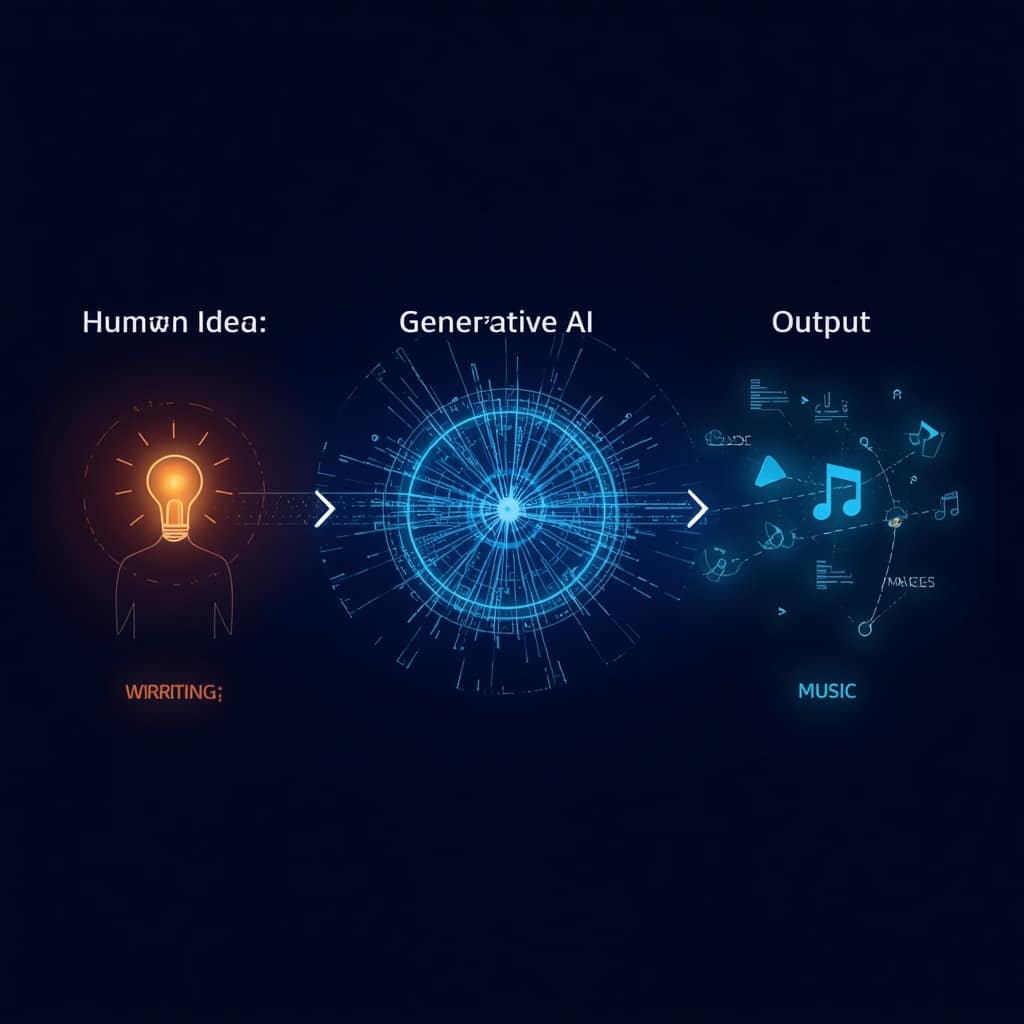
At its foundation, generative AI exists to shrink the distance between having an idea and producing something tangible from it. Historically, turning an idea into a finished piece of writing, an image, a piece of code, or a piece of music required significant time, skill, and often specialized training. Generative AI’s core mission is to compress that gap — letting someone describe what they want and receive a usable starting point in seconds rather than hours or days.
This mission explains why generative AI has spread so quickly across such different fields. Writing, design, coding, and music production are all, at their core, translation problems — turning an internal idea into an external artifact. Generative AI targets that translation step directly, regardless of the specific creative or technical domain.
How This Mission Shapes What Generative AI Actually Does
Democratizing creation — By lowering the skill threshold required to produce a first draft — of writing, of an image, of code — generative AI extends creative and technical capability to people who previously lacked the specialized training to produce it themselves.
Accelerating iteration — Traditional creation processes often involve long cycles between an idea and seeing it realized. Generative AI compresses that cycle dramatically, letting people test many variations of an idea quickly rather than committing significant time to a single attempt.
Handling the repetitive groundwork — A large share of creative and technical work involves repetitive groundwork — boilerplate code, standard document structures, common design patterns. Generative AI absorbs much of this repetitive layer, freeing human effort for the genuinely novel parts of a task.
Extending capability, not just speed — Beyond simply working faster, generative AI can also extend what a single person is capable of producing — a solo marketer generating campaign variations that would previously have required a larger creative team, for example.
Where the Mission Succeeds Clearly
Generative AI’s core mission is most clearly fulfilled in tasks with high creation cost but low precision requirements — first drafts, brainstorming, exploratory prototypes, and routine content that benefits more from speed than from painstaking precision. A marketing team generating ten headline variations to A/B test, a developer scaffolding boilerplate code, a designer exploring visual directions before committing to one — these are all cases where generative AI’s speed advantage delivers real, unambiguous value.
Where the Mission Runs Into Limits
The same core mission — fast translation from idea to output — runs into real limits when precision, originality, or verified accuracy matter more than speed. Generative AI can produce plausible-sounding text that’s factually wrong, code that looks correct but contains subtle bugs, or images that are visually impressive but miss a specific creative brief’s nuance. In these cases, the speed generative AI offers becomes a liability if it isn’t paired with careful human review — a fast wrong answer is often worse than a slow correct one.
This is why the most effective uses of generative AI treat its output as a draft or starting point requiring human judgment, not as a finished, trustworthy final product on its own.
The Mission’s Broader Implications
Understanding generative AI’s core mission — compressing the gap between idea and output — helps explain both its genuine value and its most common criticisms. Concerns about job displacement often center on tasks where the “translation from idea to output” step was previously a paid skill in itself; when AI compresses that step, the economic value of doing it manually shifts. Concerns about content quality and homogenization often stem from generative AI’s strength at producing competent-but-generic output quickly, which can crowd out more distinctive, deliberately crafted work if used without sufficient human refinement.
Neither of these tensions has a clean resolution yet, but understanding them through the lens of generative AI’s actual core mission — rather than either uncritical hype or blanket dismissal — makes it easier to use the technology thoughtfully.
Conclusion
Generative AI’s core mission isn’t to replace human creativity or judgment — it’s to compress the gap between having an idea and producing something from it. That mission explains both where the technology delivers genuine, unambiguous value (fast drafts, iteration, repetitive groundwork) and where it runs into real limits (precision-critical work, verified accuracy, deeply original creative direction). Keeping this core mission in view is a more useful lens for evaluating generative AI than either treating it as a universal solution or dismissing it as pure hype.
FAQs
Q:01. What is the main purpose of generative AI? Generative AI’s core mission is to reduce the gap between having an idea and producing a tangible output from it — compressing the time and skill traditionally required to turn an idea into writing, images, code, or other creative or technical output.
Q:02. Is generative AI meant to replace human creativity? Not according to its core design purpose. It’s most effective as an accelerant for human creativity and judgment — handling repetitive groundwork and fast first drafts — rather than as a full replacement for human creative direction and review.
Q:03. What kinds of tasks is generative AI best suited for? Tasks with high creation cost but lower precision requirements — brainstorming, first drafts, exploratory prototypes, and routine content — are where generative AI’s speed advantage delivers the clearest value.
Q:04. Why does generative AI sometimes produce inaccurate results? Generative AI is optimized for fast, plausible-sounding output based on learned patterns, not verified accuracy. This makes it less reliable for tasks where factual precision matters more than speed, without human review.
Q:05. How should businesses think about using generative AI effectively? Treating generative AI output as a starting draft requiring human review, rather than a finished final product, generally leads to better outcomes than relying on it for precision-critical tasks without oversight.


