

Introduction
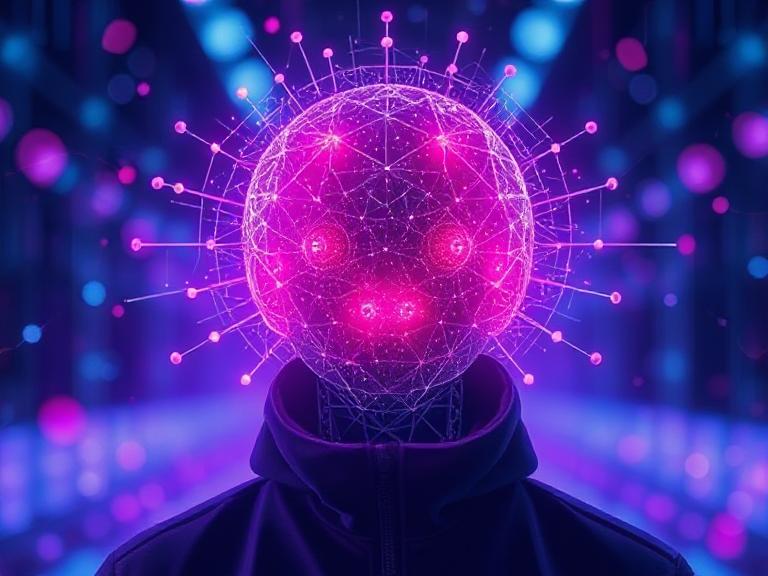
As artificial intelligence evolves at breakneck pace, two technical behemoths—Quantum Computing and Generative AI (GenAI)—are racing toward convergence. GenAI models such as ChatGPT, DALL·E, and Stable Diffusion can generate text, graphics, and code. However, quantum computing has the potential to solve previously intractable problems at unprecedented rates.
But what happens if these two forces merge? Let’s take a theoretical yet exciting look into Quantum AI-enhanced Generative Models and how they can push the boundaries of creativity, research, and computation.
What Is Quantum AI?
Quantum AI refers to artificial intelligence algorithms that run on quantum computers. Quantum bits, or qubits, differ from classical bits in that they can exist in several states at the same time—a characteristic known as superposition. This, paired with entanglement and quantum tunneling, enables quantum systems to do massively parallel computations.
Imagine training a neural network in seconds rather than days.
Generative AI: Creativity Meets Algorithms
Generative AI models are trained to generate content using input data. GenAI analyzes patterns and predicts outcomes for everything from AI-generated movies to music and software code. However, these models require a lot of computer power and storage, which limits their scalability.
This is where quantum computing could provide a game-changing advantage.
How Quantum Computing Can Transform GenAI
Faster Model Training
Quantum computers may examine several data states at once, lowering the time required to optimize large-scale models. This means weeks of instruction could be reduced to hours or minutes.
Enhanced Generative Capabilities
Quantum systems may enable more complex probability distributions, allowing models to produce higher-resolution visuals, nuanced language, or hyper-personalized information.
Improved Data Sampling
Quantum-enhanced data sampling may enable improved latent space exploration in models such as GANs or VAEs, resulting in more diverse and innovative outputs.
Reduced Energy Consumption
Unlike classical supercomputers, quantum systems are theoretically more energy efficient for certain tasks, making AI more environmentally friendly.
Challenges Ahead
- Quantum Decoherence: Qubits are sensitive and readily disrupted, posing a danger of data loss.
- Hardware Limitations: Current quantum computers are insufficiently scalable for widespread GenAI.
- Algorithm Compatibility: Most current GenAI frameworks were designed for traditional computers and must be reengineered.
Related Articles
- 👉 Generative AI in Video Creation: Revolutionizing the Industry
- 👉 The Rise of Stability AI: Pioneering the Future of Generative AI
- 👉 Generative AI: Transforming Creativity and Problem-Solving
The Future: Quantum-Accelerated Generative Intelligence
While we are still in the early stages of quantum-AI convergence, research labs (such as Google’s Quantum AI, IBM Q, and Xanadu) are actively investigating integrations. One day, we might see real-time, quantum-powered AI create complete virtual worlds, scientific simulations, or personalized entertainment on demand.