


Introduction
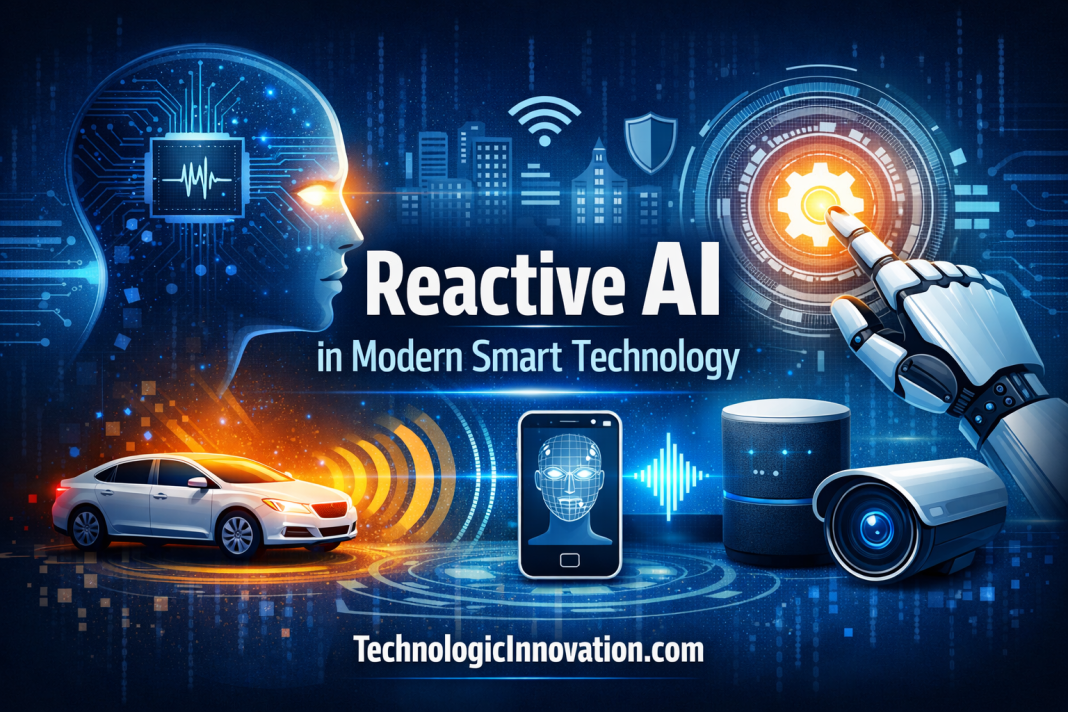
Think about how quickly your phone unlocks or how your car reacts to sudden obstacles. These actions feel instant—and that’s exactly the point.
Behind many of these smart features is Reactive AI, a simple yet powerful form of artificial intelligence. While advanced AI models dominate headlines, reactive systems quietly run the technologies we depend on every day.
What Is Reactive AI?
Reactive AI is a type of artificial intelligence that responds only to current inputs. It does not store memories or learn from past experiences.
A well-known example is IBM Deep Blue, which defeated Garry Kasparov in chess. It analyzed the board in real time and made decisions based on the present situation.
Key Characteristics
- No memory or learning capability
- Responds instantly to inputs
- Focused on specific tasks
- Highly reliable and consistent
Why Reactive AI Still Matters
1. Real-Time Decision Making
Reactive AI excels in situations where speed matters most.
Common Use Cases:
- Automatic braking systems in vehicles
- Face recognition for smartphone unlocking
- Motion sensors in smart homes
These systems act immediately without needing complex processing.
2. Reliability and Consistency
Reactive AI follows predefined rules. It produces predictable outcomes every time.
This makes it ideal for:
- Medical devices
- Aviation systems
- Industrial machinery
In critical environments, consistent behavior is essential.
3. Cost-Effective and Efficient
Reactive AI systems are simpler to build and maintain.
Benefits:
- Lower development costs
- Minimal computing requirements
- Faster implementation
Businesses often prefer reactive AI for straightforward tasks.
4. Energy Efficiency
Unlike advanced AI models, reactive systems use less power.
They are perfect for:
- IoT devices
- Wearables
- Smart sensors
This efficiency helps extend battery life and reduce costs.
Reactive AI vs Other AI Types
Reactive AI vs Limited Memory AI
- Reactive AI: No learning, instant responses
- Limited Memory AI: Uses past data for better decisions
Reactive AI vs Generative AI
- Reactive AI: Rule-based and task-specific
- Generative AI: Creates new content like text or images
Each type serves a different purpose in modern technology.
Where Reactive AI Is Used Today
Smart Devices
- Smartphones unlocking with face recognition
- Voice assistants responding instantly
- Smart lights turning on with motion
Automotive Technology
- Collision detection systems
- Lane departure warnings
- Parking assistance
Cybersecurity
Reactive AI helps detect threats instantly by identifying suspicious activity and blocking it in real time.
Real-World Example
The success of IBM Deep Blue proved that reactive systems can outperform humans in specific tasks.
Today, similar systems power:
- Traffic control systems
- Manufacturing robots
- Safety mechanisms in vehicles
Limitations of Reactive AI
Reactive AI has clear limitations:
- It cannot learn from experience
- It lacks adaptability
- It struggles with complex environments
Because of this, developers often combine it with advanced AI systems.
The Future of Reactive AI
Reactive AI is not outdated—it is evolving.
It often acts as the first layer in smart systems, handling immediate decisions while advanced AI manages deeper analysis.
Expect continued use in:
- Edge computing
- Autonomous systems
- Real-time monitoring tools
Related Reading
- Top AI Affiliate Programs in 2026: High Commission SaaS Tools for Passive Income
- Best AI Tools Affiliate Programs (2026) Earn Recurring Income with ChatGPT & Automation
- From Deep Blue to Smart Devices: How Reactive AI Still Powers Today’s Tech.
FAQs
Q:01 What is Reactive AI used for?
Reactive AI is used for tasks that require instant responses, such as safety systems, smart devices, and automation.
Q:02 Is Reactive AI still relevant?
Yes, it remains essential for real-time and safety-critical applications.
Q:03 Can Reactive AI learn?
No, it does not learn or adapt over time.
Q:04 Why is Reactive AI important?
It provides speed, reliability, and efficiency in modern technology.
Conclusion
Reactive AI may seem simple, but it plays a critical role in modern technology. It ensures fast, reliable, and efficient responses in systems we use every day.
If you want to understand smart technology, you need to understand Reactive AI—it’s the foundation that keeps everything running smoothly.


