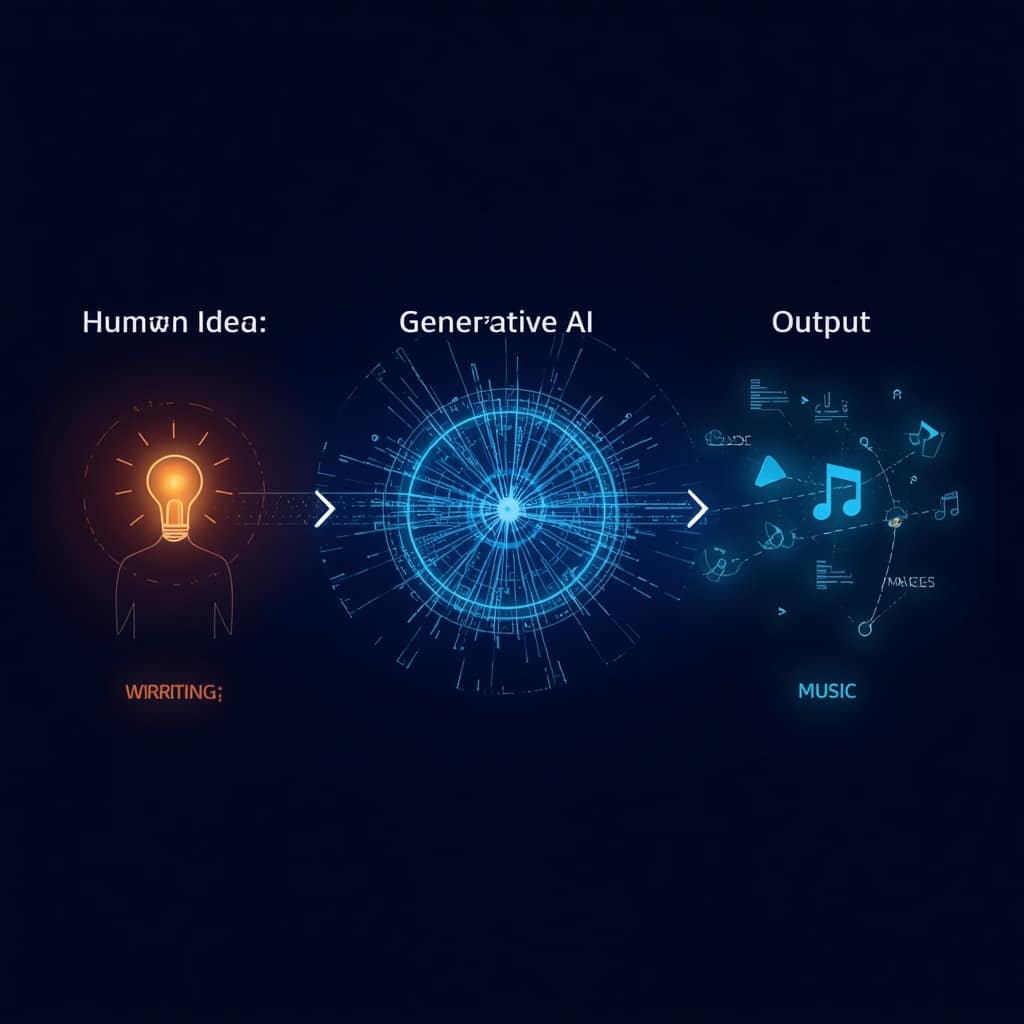
Generative Artificial Intelligence (Generative AI) is revolutionizing how machines interact with data. Unlike traditional AI that relies on recognizing patterns or making decisions based on past input, generative AI creates entirely new content. This includes images, videos, music, text, and even code. But the big question remains: what is the real purpose behind it?
At its core, the main goal of generative AI is to enable machines to produce original content by learning from massive amounts of data. This type of AI doesn’t just repeat what it has seen—it generates new ideas, designs, or language that didn’t exist before. It is about creative intelligence and enhancing human potential through artificial creativity.
Boosting Creativity and Innovation
One of the most important goals of generative AI is to assist human creativity. Writers, designers, developers, and artists can use AI tools to brainstorm ideas, create prototypes, or generate high-quality content in minutes. AI models like ChatGPT and Midjourney empower users to visualize or express concepts that might otherwise take hours or days to produce.
It acts as a creative partner that expands possibilities, allowing humans to experiment more freely with designs, scripts, artwork, or product concepts.
Automating Repetitive Content Creation
Generative AI also plays a critical role in content automation. For companies that need a lot of content—like product descriptions, social media posts, or customer support responses—AI can generate text quickly and accurately. This reduces manual workload, increases productivity, and saves time.
For example, ecommerce sites can now create thousands of product listings using generative AI tools, all tailored to match branding and tone without human intervention.
Personalizing User Experience
Another goal is to improve personalization. Generative AI can customize content in real-time based on individual user behavior, interests, or preferences. Whether it’s personalized ads, music playlists, or AI-generated customer messages, it helps businesses connect with users on a more human level.
This makes digital experiences smarter and more relevant, increasing engagement and satisfaction.
Advancing Education and Training
In education, generative AI can create learning materials, quizzes, summaries, or even simulate tutors. It can adapt content to different learning levels, languages, and needs, making education more accessible and inclusive.
Trainers in medical, technical, or engineering fields can use generative AI to simulate real-world situations for practice, reducing costs and improving learning quality.
Enhancing Software Development
Generative AI is also transforming how software is built. Tools like GitHub Copilot help developers by suggesting code, fixing bugs, or even generating full functions. This not only speeds up development but also makes coding more accessible to non-programmers.
The goal here is to accelerate innovation and reduce barriers to creating technology.
Reducing Human Error and Bias
By training on diverse and comprehensive datasets, generative AI can reduce human error and cognitive bias in areas like finance, law, or healthcare. When designed ethically, it provides suggestions based on broader data than a human might consider.
This leads to more balanced decision-making and risk management, especially when paired with human judgment.
Conclusion
The real purpose of generative artificial intelligence is to enhance human capabilities. It supports creativity, automates repetitive tasks, personalizes content, improves education, and enables faster innovation. Instead of replacing people, generative AI aims to empower them to think bigger, move faster, and explore ideas in ways never before possible. As it continues to evolve, its role will only become more vital in reshaping our future.
Related Reading
- Sony Launches $150K Research Grants to Advance AI and Entertainment Innovation in 2025.
- What Is Cosmos in AI? A New Era of Scalable Intelligence.
- How Computer Vision Is Transforming Modern Medicine.
FAQs
1. What exactly is generative artificial intelligence?
Generative AI refers to technology that can create new content such as images, text, music, or video by learning from large datasets.
2. How does generative AI differ from traditional AI?
Traditional AI focuses on prediction or classification, while generative AI creates entirely new data or content based on what it has learned.
3. Can generative AI replace human creativity?
No, its goal is to assist, not replace. It acts as a tool to boost human creativity and efficiency.
4. Is generative AI safe to use in business?
Yes, when used responsibly with proper data handling and ethical considerations, it can be very safe and beneficial.
5. What industries benefit the most from generative AI?
Industries like marketing, entertainment, healthcare, education, finance, and software development are seeing major impacts from generative AI.