
Introduction
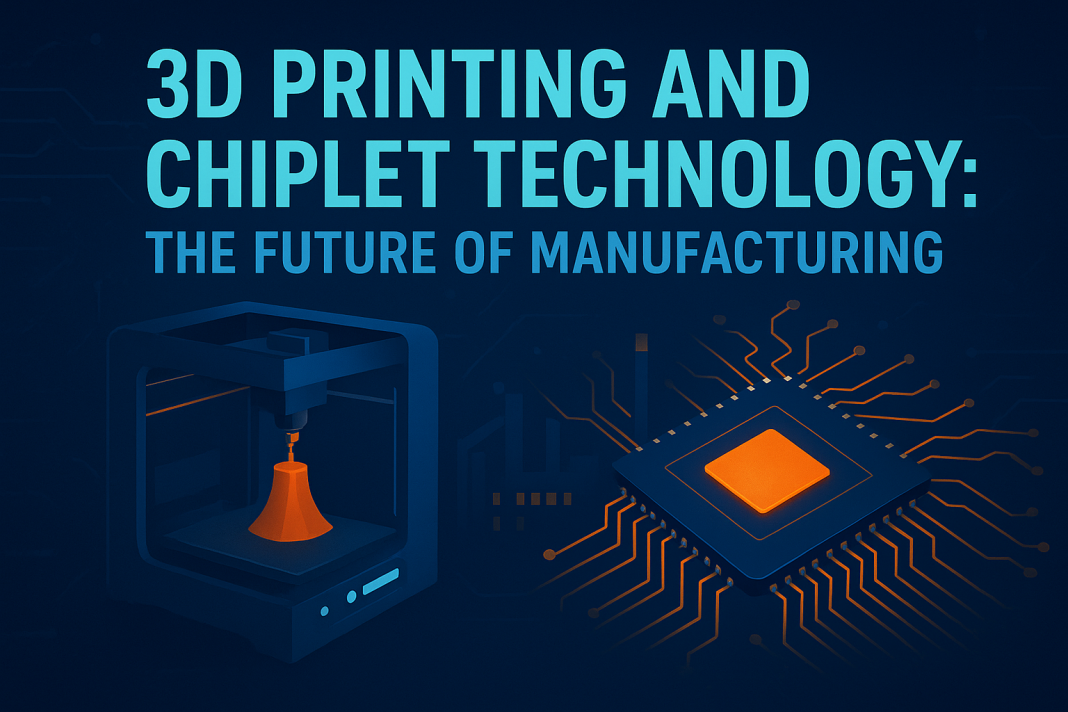
Manufacturing is undergoing a radical transformation. Two game-changing innovations—3D printing and chiplet technology—are paving the way for faster, smarter, and more efficient production. Together, they are redefining how products are designed, built, and delivered across industries.
Why These Technologies Matter
The demand for smaller, more powerful devices and faster production cycles is higher than ever. Traditional manufacturing methods struggle to keep up. Enter:
- 3D Printing: Enables rapid prototyping and custom manufacturing.
- Chiplets: Break down large, complex chips into smaller, modular components.
Both offer cost efficiency, design flexibility, and the potential to revolutionize everything from consumer electronics to aerospace engineering.
3D Printing: Shaping the Future of Products
3D printing, also known as additive manufacturing, creates objects layer by layer. This approach allows for unique designs that traditional methods can’t match.
Key Benefits of 3D Printing
- Rapid Prototyping: Ideas move from digital files to physical models in hours.
- Customization: Tailored products for healthcare, fashion, and aerospace.
- Sustainability: Less material waste compared to conventional manufacturing.
- Cost Savings: Reduces the need for expensive molds and tooling.
Real-World Example
In aerospace, companies like Airbus use 3D-printed parts to reduce weight, saving fuel and lowering emissions without compromising safety.
Chiplet Technology: Smarter, Faster, Cheaper Chips
Instead of building a single large processor, chiplet technology connects smaller chip components together. This modular design improves flexibility and reduces costs.
Benefits of Chiplet Architecture
- Scalability: Easier to add or upgrade components.
- Performance: Enables advanced computing for AI, cloud, and 5G.
- Cost Efficiency: Higher yields reduce overall manufacturing expenses.
- Flexibility: Chips can be tailored for specific applications.
Industry Example
AMD has been a pioneer in chiplet technology. Its Ryzen processors use chiplets to deliver higher performance at competitive prices, challenging traditional semiconductor giants.
The Intersection of 3D Printing and Chiplets
What happens when you combine 3D printing with chiplet-based semiconductors? The potential is enormous:
- On-Demand Electronics: Printed circuit boards with embedded chiplets.
- Localized Production: Reduces reliance on global supply chains.
- Faster Innovation Cycles: Design, test, and produce electronics in record time.
This synergy could redefine electronics manufacturing, making it more resilient and adaptive.
Challenges Ahead
While promising, these technologies face hurdles:
- Scalability: Mass production with 3D printing is still expensive.
- Standardization: Chiplet interfaces need global standards.
- Quality Assurance: Ensuring reliability across printed parts and modular chips.
- Supply Chain Integration: Existing systems must adapt to new workflows.
Future Outlook
By 2030, experts predict that 3D printing and chiplet technology will be mainstream in industries like:
- Healthcare: Custom implants and bio-printed tissues with smart chips.
- Automotive: Lightweight 3D-printed components with chiplet-based AI systems.
- Consumer Electronics: Personalized gadgets built with modular chips.
- Defense and Aerospace: Faster, more secure manufacturing of mission-critical systems.
Conclusion
3D printing and chiplet technology are not just trends—they are the foundation of next-generation manufacturing. Together, they offer speed, flexibility, and resilience in a rapidly changing world. The future of innovation lies in merging advanced materials with modular design, powering everything from smartphones to spacecraft.
Related Reading
- The Internet of Things (IoT): Opportunities and Challenges.
- The Impact of 5G on Technology and Society.
- Next-Generation Battery Technology and Advanced Materials Explained.
FAQs
1. What industries benefit most from 3D printing?
Aerospace, healthcare, automotive, and fashion are leading adopters due to customization and reduced material waste.
2. How does chiplet technology differ from traditional chips?
Instead of one large chip, chiplets use smaller, modular pieces connected together, improving cost and scalability.
3. Can 3D printing be used to make semiconductors?
Research is ongoing. While full semiconductor printing isn’t ready yet, 3D printing is already used in circuit boards and chip packaging.
4. What’s the biggest challenge for chiplet adoption?
Standardization. Without common interfaces, widespread adoption is difficult.
5. Will 3D printing replace traditional manufacturing?
Not entirely. It will complement traditional methods, especially for prototyping, customization, and complex designs.