
Introduction
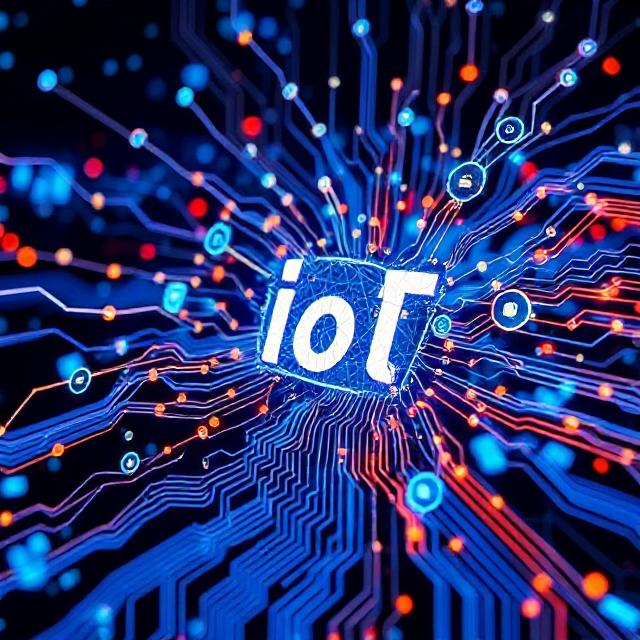
Imagine a world where your fridge orders groceries automatically, your car warns you about traffic in real-time, and factories run with minimal human intervention. This is the reality enabled by the Internet of Things (IoT). IoT connects everyday devices to the internet, allowing them to collect, share, and act on data. While the opportunities are immense, IoT also presents significant challenges for businesses and individuals.
What is IoT?
The Internet of Things refers to a network of physical devices—smart appliances, wearable gadgets, industrial sensors, and vehicles—connected to the internet. These devices communicate with each other, exchange data, and perform tasks without manual intervention.
Types of IoT
- Consumer IoT – Smart homes, wearables, personal devices.
- Industrial IoT (IIoT) – Factories, supply chains, energy management.
- Healthcare IoT – Remote patient monitoring, wearable health trackers.
- Smart Cities – Traffic management, waste monitoring, energy-efficient systems.
Opportunities Offered by IoT
1. Improved Operational Efficiency
IoT devices provide real-time data that helps businesses optimize processes, reduce downtime, and predict maintenance needs. For example, smart sensors in factories monitor equipment health to prevent costly failures.
2. Enhanced Customer Experience
Connected devices enable personalized experiences. Retailers can use IoT to track customer behavior in-store, while smart home devices offer tailored automation for users.
3. Data-Driven Decision Making
IoT generates massive amounts of data that can be analyzed for better insights and strategic decisions. Companies can understand trends, forecast demand, and make informed business moves.
4. Cost Savings
By monitoring energy usage and automating processes, IoT helps businesses reduce operational costs. Smart lighting, heating, and predictive maintenance are practical examples.
5. Innovation and New Business Models
IoT opens doors to innovative services, like subscription-based smart appliances, telemedicine, and smart logistics solutions. Companies can explore new revenue streams using connected devices.
Challenges of IoT
1. Security Concerns
IoT devices are vulnerable to cyberattacks. Weak passwords, outdated firmware, and unsecured networks can expose sensitive data.
2. Data Privacy
The massive collection of personal and business data raises privacy issues. Companies must ensure compliance with regulations like GDPR.
3. Interoperability
Different IoT devices may use different protocols and standards, making seamless integration challenging.
4. High Implementation Costs
Setting up IoT infrastructure can require significant investment, especially for small businesses.
5. Data Management
The sheer volume of data generated by IoT devices requires robust storage, processing, and analytics solutions.
Real-World Examples of IoT
- Amazon Alexa – Smart assistant connecting multiple devices in homes.
- Tesla – Connected cars providing real-time updates and autonomous driving features.
- Siemens Smart Factories – Industrial IoT optimizing production efficiency.
- Philips Hue – Smart lighting system controlled remotely through IoT.
The Future of IoT
The IoT ecosystem is expanding rapidly. With 5G connectivity, edge computing, and AI integration, IoT will become smarter, faster, and more secure. Businesses adopting IoT early will gain a competitive edge, driving innovation and efficiency across industries.
Conclusion
The Internet of Things is redefining the way we live and work. From smarter cities to connected industries, IoT presents incredible opportunities but also demands careful consideration of security, privacy, and cost challenges. Businesses that navigate these wisely will thrive in the connected future.
Embracing IoT today means staying competitive, innovative, and prepared for a world where everything is connected.
Related Reading.
- From Humans to Machines: The Rise of AI Buyers in the Global Economy.
- Machine Economy 2030: Why Autonomous Customers Are the Next Big Trend.
- Breakthrough in Qubit Precision Could Shift Quantum Computing’s Future.
FAQs
1. What is IoT in simple terms?
IoT is a network of devices that communicate and share data over the internet to perform tasks automatically.
2. How does IoT benefit businesses?
IoT improves efficiency, reduces costs, enhances customer experiences, and enables data-driven decisions.
3. What are the main challenges of IoT?
Security risks, data privacy concerns, interoperability issues, high costs, and data management challenges.
4. Which industries use IoT the most?
Manufacturing, healthcare, retail, smart cities, and transportation are major adopters.
5. How is IoT evolving in the future?
With AI, 5G, and edge computing, IoT will become faster, more intelligent, and more secure.