
Introduction
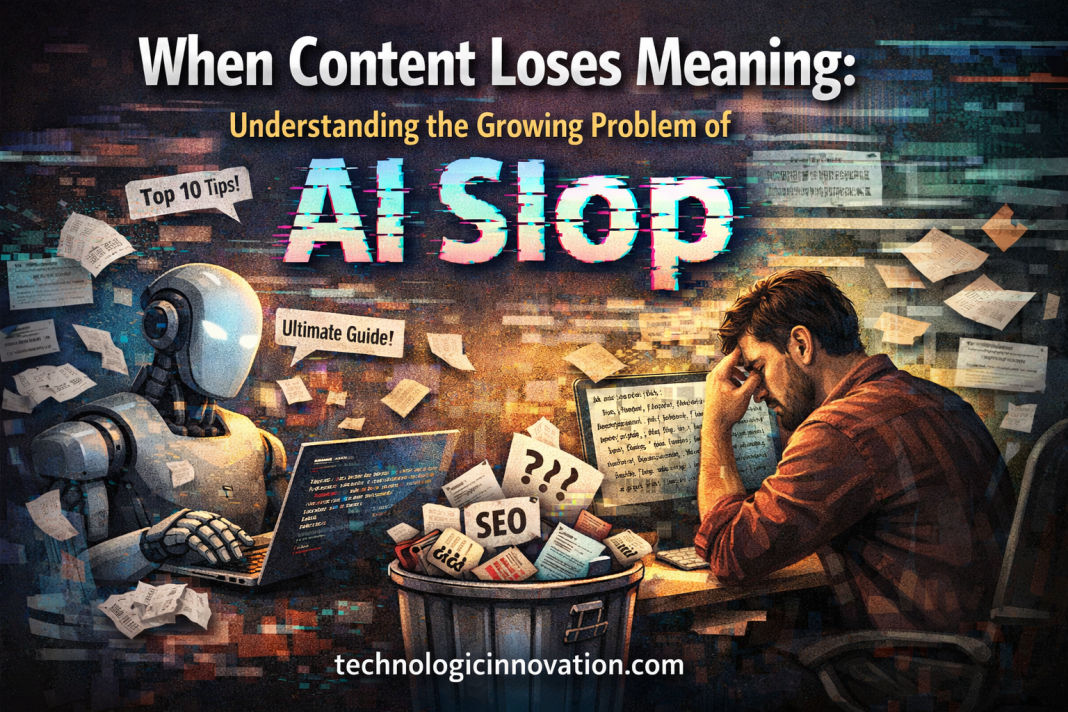
Scroll through social media for a few minutes, and you’ll notice something strange. Content looks polished, sounds convincing—but says almost nothing.
Welcome to the world of AI slop.
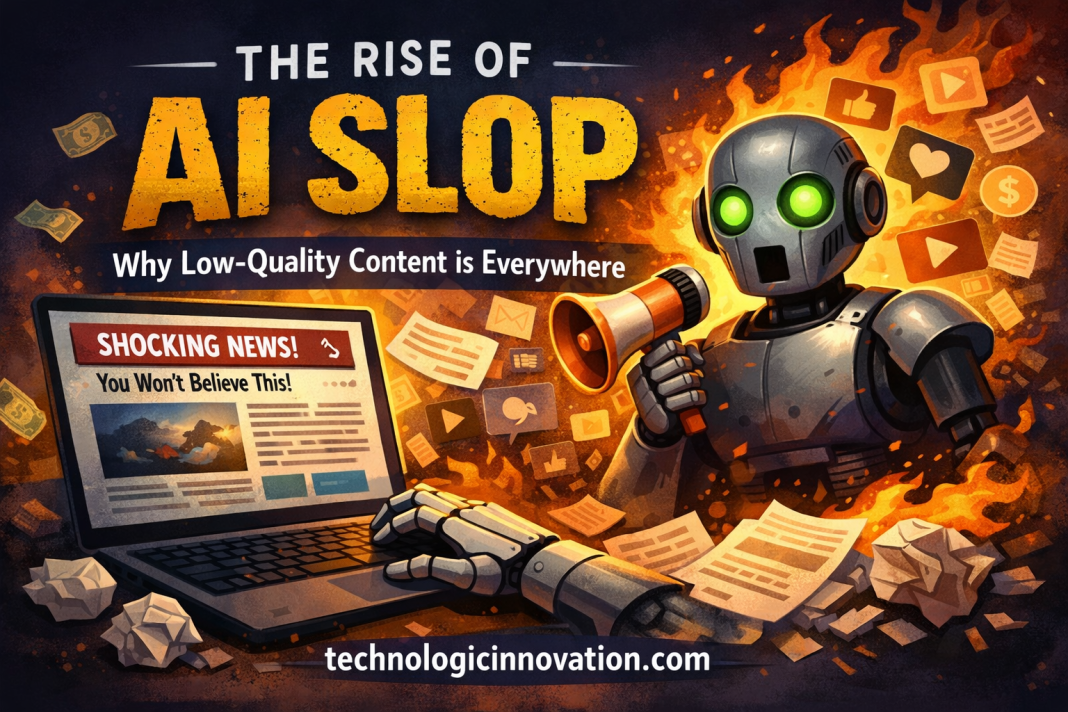
This growing wave of low-quality, AI-generated content is quietly reshaping the internet. It’s fast, cheap, and everywhere. But it comes at a cost.
Let’s break down what AI slop really is, why it’s spreading, and how you can avoid falling into the trap.
What Is AI Slop?
AI slop refers to mass-produced, low-value content created using artificial intelligence tools.
It often looks professional but lacks:
- Original insight
- Depth or accuracy
- Human creativity
In simple terms, it’s content that exists just to fill space and grab attention—not to inform or help.
Why Is AI Slop Increasing So Fast?
1. Content Creation Is Easier Than Ever
AI tools can now generate:
- Articles
- Videos
- Images
- Voiceovers
All within minutes. This makes it incredibly easy to flood the internet with content.
2. Algorithms Reward Quantity Over Quality
Platforms prioritize:
- Clicks
- Watch time
- Engagement
This means even low-quality content can succeed if it grabs attention quickly.
3. Low Cost, High Profit Potential
Creating AI content requires minimal effort. As a result:
- People publish in bulk
- Even small traffic generates revenue
Common Signs of AI Slop
Not sure if you’re looking at AI slop? Watch for these red flags:
- Repetitive or generic wording
- Overly dramatic or clickbait headlines
- Lack of clear sources or facts
- Content that feels “empty” after reading
- Strange visuals or unnatural phrasing
If it looks good but teaches you nothing, it’s likely AI slop.
Real-World Examples
Example 1: Viral Short Videos
Many short-form videos feature:
- AI-generated voices
- Random visuals stitched together
- Sensational claims without proof
They’re designed to go viral—not to be accurate.
Example 2: Low-Quality Blog Posts
Some websites publish hundreds of articles daily using AI. These posts:
- Repeat common information
- Add no new insights
- Exist mainly for SEO traffic
Example 3: Fake “Educational” Content
You may see posts explaining topics confidently—but incorrectly. These errors spread quickly when copied by other AI tools.
Why AI Slop Is a Problem
1. Spreads Misinformation
AI often pulls from existing data. If that data is wrong, the error multiplies.
2. Reduces Content Quality
When low-value content dominates, it becomes harder to find genuinely useful information.
3. Hurts Creators
Writers, artists, and educators struggle to compete with mass-produced content.
4. Impacts Attention Span
Endless shallow content trains people to consume quickly, not think deeply.
How to Avoid AI Slop
Here are practical ways to protect yourself:
Be Selective With Content
Follow creators who:
- Share original insights
- Provide sources
- Offer real value
Fact-Check Information
Don’t trust everything at face value. Cross-check important claims.
Train Your Algorithm
Engage with high-quality content and ignore low-value posts. Platforms adapt to your behavior.
Look for Human Perspective
Content with personal experience, opinions, or storytelling is usually more reliable.
AI Slop vs High-Quality Content
| Feature | AI Slop | High-Quality Content |
|---|---|---|
| Purpose | Attention & clicks | Value & insight |
| Depth | Shallow | Detailed |
| Originality | Low | High |
| Trustworthiness | Questionable | Reliable |
| User Experience | Forgettable | Memorable |
FAQs
Q: 01 Is all AI-generated content bad?
No. AI is a tool. High-quality content can still be created with AI when humans guide, edit, and add value.
Q: 02 Why do platforms allow AI slop?
Because it drives engagement, which increases revenue.
Q: 03 Can AI slop be harmful?
Yes. It can spread misinformation, reduce trust, and make it harder to find useful content.
Q: 04 How can creators avoid producing AI slop?
Focus on:
- Original ideas
- Personal experience
- Clear, helpful insights
Related Reading
- Top Website Speed Optimization Tools (2026)
- Why Reactive AI Still Powers Modern Smart Technologie
- The Role of Digital Technologies in Building Resilient and Future-Ready Supply Chains.
Conclusion
- AI slop isn’t just a trend—it’s a shift in how content is produced and consumed.
- But here’s the good news: quality still wins in the long run.
- If you focus on meaningful, well-crafted content—and consume thoughtfully—you’ll stay ahead of the noise.