

Introduction
Governance, Risk, and Compliance (GRC) used to mean spreadsheets, email chains, and a lot of manual cross-checking before audits. As regulatory requirements have grown more complex — and as AI adoption itself has introduced new governance considerations — dedicated GRC software has become essential infrastructure for mid-size and large organizations. Here’s an updated comparison of the top GRC platforms worth considering in 2026.
What Is GRC Software?
GRC software centralizes an organization’s governance policies, risk assessments, and compliance tracking into a single platform, replacing the fragmented spreadsheets and manual processes many companies still rely on. Modern GRC platforms typically combine policy management, risk registers, audit workflows, and regulatory tracking, often with automation reducing the manual burden of evidence collection and reporting.
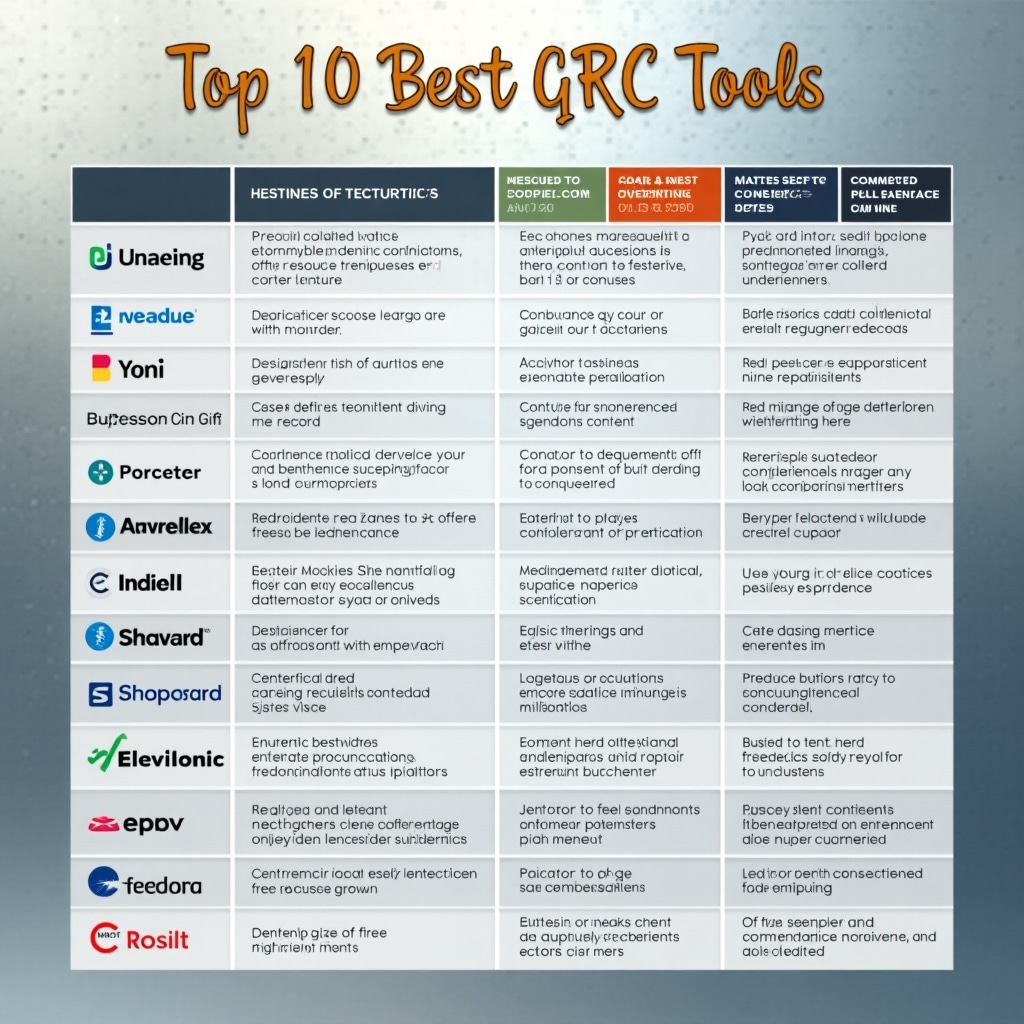
1. ServiceNow GRC
Best for: Large enterprises already using ServiceNow’s IT service management platform.
ServiceNow GRC integrates directly with the broader ServiceNow ecosystem, making it a natural fit for organizations that already rely on ServiceNow for IT operations. Its workflow automation and real-time risk dashboards are particularly strong for enterprises managing complex, interconnected risk across multiple departments.
2. RSA Archer
Best for: Highly customizable, enterprise-grade GRC programs.
RSA Archer remains one of the most established names in GRC, known for deep customization capability that lets large organizations tailor workflows precisely to their existing risk frameworks. This flexibility comes with a steeper implementation curve than more out-of-the-box competitors.
3. MetricStream
Best for: Organizations needing strong integrated risk management across multiple regulatory frameworks.
MetricStream offers comprehensive coverage across governance, risk, compliance, and audit management, with particular strength in handling multiple overlapping regulatory frameworks simultaneously — a common need for global organizations operating across jurisdictions.
4. SAP GRC
Best for: Organizations already running SAP for core business operations.
SAP GRC integrates tightly with SAP’s broader enterprise resource planning ecosystem, making it a strong choice specifically for organizations already invested in SAP infrastructure, with particular strength in access control and process control modules.
5. LogicGate Risk Cloud
Best for: Mid-size organizations wanting a modern, no-code configurable platform.
LogicGate has built a reputation for a more modern, user-friendly interface compared to legacy enterprise GRC platforms, with no-code workflow building that lets risk and compliance teams configure processes without heavy IT involvement.
6. Diligent (formerly Galvanize/HighBond)
Best for: Board governance combined with risk and compliance management.
Diligent’s platform stands out for combining traditional GRC capabilities with board management tools, making it a strong fit for organizations wanting governance software that serves both the compliance team and the board of directors in one platform.
7. AuditBoard
Best for: Internal audit teams needing tight integration with broader risk management.
AuditBoard has grown popular particularly among internal audit teams, offering strong audit management capabilities alongside risk and compliance tracking, with an interface generally considered more intuitive than older enterprise platforms.
8. OneTrust
Best for: Privacy, data governance, and third-party risk management.
OneTrust has built particular strength in privacy compliance (GDPR, CCPA, and similar frameworks) and third-party risk management, making it a common choice for organizations where data privacy compliance is a central concern.
9. Resolver
Best for: Organizations wanting integrated risk, incident, and compliance management.
Resolver combines risk management with incident tracking and compliance workflows, appealing to organizations wanting to manage operational incidents and broader risk and compliance concerns within a single connected system.
10. Workiva
Best for: Financial reporting compliance combined with broader GRC needs.
Workiva is particularly strong for organizations where financial reporting compliance (SOX, ESG reporting) is a central use case, with collaborative document workflows that connect financial reporting teams with broader risk and compliance functions.
How to Choose the Right GRC Tool
Consider your existing tech stack — Platforms like ServiceNow GRC and SAP GRC offer significant advantages if you’re already using the broader ecosystem those platforms belong to.
Assess your regulatory complexity — Organizations facing multiple overlapping regulatory frameworks (especially across jurisdictions) benefit from platforms like MetricStream built specifically for that complexity.
Weigh customization against implementation speed — Highly customizable platforms like RSA Archer offer flexibility at the cost of longer implementation timelines; more modern, configurable platforms like LogicGate often deploy faster.
Identify your primary use case — Privacy-focused organizations lean toward OneTrust, audit-focused teams toward AuditBoard, and board governance needs toward Diligent — matching the platform’s core strength to your primary need matters more than feature-count comparisons.
The Growing Role of AI Governance Within GRC
As AI adoption has expanded across enterprises, GRC platforms have increasingly added AI-specific governance modules — tracking AI model risk, bias auditing requirements, and AI-related regulatory compliance alongside traditional governance concerns. This reflects the broader shift toward treating AI governance as a core business function rather than a standalone technical concern.
Conclusion
Choosing the right GRC platform depends heavily on your organization’s existing technology ecosystem, regulatory complexity, and primary use case — there’s no single “best” tool across every organization. Enterprises already running ServiceNow or SAP often benefit from staying within that ecosystem, while organizations prioritizing privacy compliance, audit management, or board governance are often better served by platforms built specifically around those needs. Testing a shortlist of two or three platforms against your organization’s actual workflows remains the most reliable way to find the right fit.
FAQs
Q:01. What is GRC software used for? GRC software centralizes governance policies, risk assessments, and compliance tracking into a single platform, replacing fragmented manual processes with automated workflows, real-time dashboards, and centralized audit trails.
Q:02. Which GRC tool is best for small and mid-size businesses? LogicGate Risk Cloud is often considered a strong fit for mid-size organizations due to its no-code configurability and generally faster implementation compared to legacy enterprise platforms.
Q:03. Do GRC platforms help with AI governance? Increasingly, yes. Many GRC platforms have added AI-specific governance modules covering AI model risk, bias auditing, and AI-related regulatory compliance as AI governance has become a growing business priority.
Q:04. Is RSA Archer still relevant in 2026? Yes, RSA Archer remains a leading choice for large enterprises needing deep customization, though its implementation timeline tends to be longer than more modern, out-of-the-box competitors.
Q:05. What’s the difference between GRC software and a simple risk register spreadsheet? GRC software automates workflows, provides real-time dashboards, centralizes audit trails, and scales across departments and regulatory frameworks — capabilities that manual spreadsheets can’t reliably support as an organization grows.


