

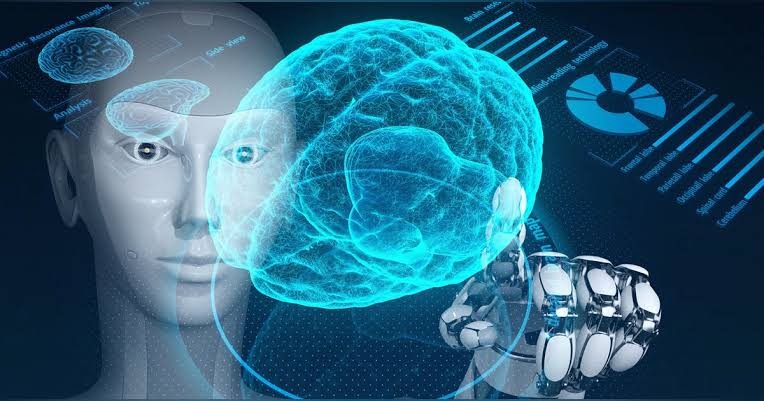

Artificial intelligence (AI) is altering many industries, and one of the most exciting developments is the creation of brain-reading robots. This cutting-edge technology enables machines to understand human thoughts and intents, enabling for hands-free operation of robots, prostheses, and digital devices.
In this post, we’ll look at what brain-reading robots are, how they work, their uses, problems, and future possibilities.
What Are Brain-Reading Robots?
Brain-reading robots are AI-powered machines that employ brain-computer interfaces (BCIs) to analyze neural activity and take appropriate actions. These robots allow direct connection between the human brain and technology, removing the need for standard input devices such as keyboards, touchscreens, and controllers.
Key Characteristics of Brain-Reading Robots
- Mind-Controlled Operation: Robots respond to brain signals without physical movement.
- Artificial Intelligence (AI) Integration: AI helps analyze brainwave patterns and improve accuracy.
- Non-Invasive and Invasive Approaches: Some systems use electroencephalography (EEG), while others require implanted brain chips.
- Real-Time Interaction: The AI processes signals instantly, enabling seamless human-robot communication.
- Adaptive Learning: AI-powered BCIs improve their responses by continuously learning from the user’s brain activity.
How Do Brain-Reading Robots Work?
Brain-reading robots use BCIs and AI-driven machine learning algorithms to understand neural activity. The process includes:
Capturing Brain Signals
- Non-invasive methods use EEG headsets or neural sensors to detect brain activity.
- Invasive methods involve implanting electrodes directly into the brain for high-precision signal capture.
2. Processing Neural Data with AI
- AI algorithms decode brain signals into specific commands.
- Machine learning enhances accuracy by recognizing patterns in brain activity.
3. Translating Thoughts into Actions
- The processed signals are converted into commands for robots or digital systems.
- The AI refines responses to ensure smooth interaction between the brain and robot.
Applications of Brain-Reading Robots
Brain-reading AI has applications in a variety of industries, including healthcare, gaming, and robotics.
Healthcare & Assistive Technology
- Mind-controlled prosthetics enable disabled individuals to regain mobility.
- AI-driven communication devices help paralyzed patients express thoughts.
- Brain-reading robots assist in stroke rehabilitation by aiding movement.
2. Robotics & Automation
- AI-powered brain-controlled robotic arms can be used in manufacturing.
- Brain-reading robots can control drones and autonomous vehicles.
3. Gaming & Virtual Reality (VR)
- Mind-controlled gaming experiences allow players to interact without controllers.
- AI and brainwave detection enhance immersion in virtual worlds.
4. Military & Defense
- Brain-controlled exoskeletons enhance soldiers’ physical abilities.
- AI-powered neural-controlled drones assist in surveillance and defense operations.
5. Smart Home & IoT Integration
- AI-driven mind-controlled smart homes adjust lighting, temperature, and security settings.
- Brain-reading AI enhances accessibility for individuals with mobility impairments.
Challenges & Ethical Concerns
While brain-reading robots provide revolutionary possibilities, they face substantial challenges:
Data Privacy & Security
- Brain data is highly sensitive and must be protected from cyber threats.
- Unauthorized access to neural signals could lead to privacy breaches.
2. Ethical Concerns
- Should AI have access to human thoughts?
- Risk of mind manipulation and potential for misuse.
3. Accuracy & Reliability
- AI must overcome signal noise and brainwave variations to ensure reliable interpretation.
- Enhancing real-time response speed remains a technical challenge.
4. Cost & Accessibility
- Advanced brain-reading AI technologies are expensive, limiting widespread adoption.
- Research efforts focus on making BCI technology more affordable and user-friendly.
The Future of Brain-Reading Robots
The future of brain-computer AI appears optimistic, with ongoing research and development in areas such as
- Neural chip implants (e.g., Elon Musk’s Neuralink) to enhance AI-powered brain interfaces.
- More advanced AI algorithms for faster and more accurate brainwave decoding.
- Wider adoption in healthcare, smart homes, and automation.
- Improved ethical and security frameworks for responsible AI use.
Conclusion
Brain-reading robots driven by AI represent a watershed moment in human-machine interaction. From assisted healthcare gadgets to smart home automation and defense applications, this technology has the potential to transform the way we interact with the world.
As AI and neuroscience improve, brain-computer interfaces will become more polished, safe, and accessible, opening up new possibilities in the future of robotics and automation.


 to interpret thoughts and control machines. Learn about applications, challenges, and future innovations in neuroscience and AI. 🚀)