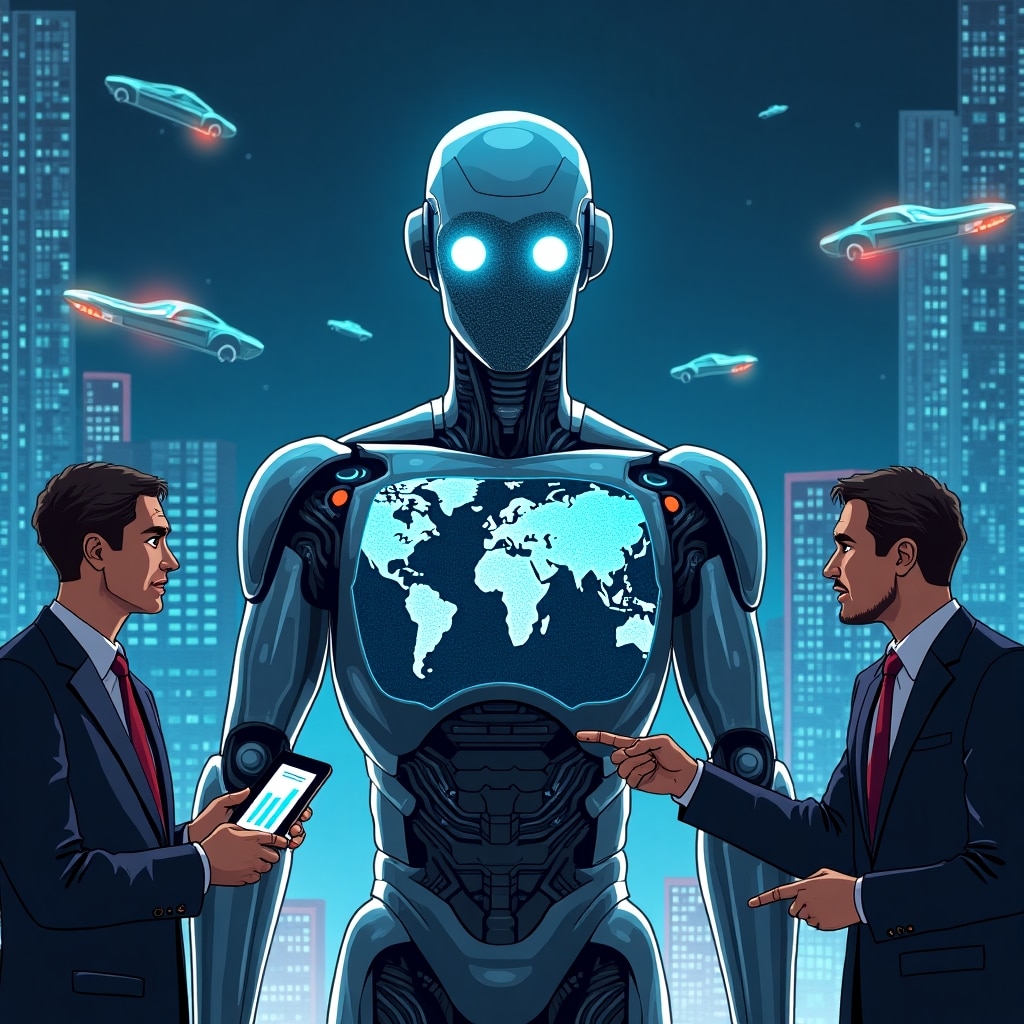


Introduction: The Silent Takeover of Enterprise AI
In 2025, artificial intelligence isn’t just about chatbots answering customer questions — it’s about autonomous AI agents quietly reshaping how entire enterprises operate. From automating workflows to making strategic decisions, these intelligent systems are becoming the invisible backbone of modern business.
While chatbots were the first wave of AI adoption, they only scratched the surface. Today’s AI agents are smarter, self-learning, and capable of running critical operations — often without human intervention. The future of enterprise efficiency is already here, and it’s running silently in the background.
From Chatbots to AI Agents: A Massive Leap Forward
Chatbots were once seen as a revolution in customer service. But they followed scripts and could only respond to limited inputs. AI agents, on the other hand, represent the next evolution — systems that understand goals, learn continuously, and act independently.
Key differences include:
- Autonomy: Agents don’t wait for user prompts; they take proactive actions.
- Learning: They adapt from data and refine decisions over time.
- Integration: They connect across systems — CRM, ERP, HR — creating unified intelligence.
- Decision-Making: They can plan, prioritize, and execute multi-step business processes.
This makes AI agents the ideal partners for large-scale enterprise operations seeking agility and speed.
The Rise of Autonomous Enterprise Operations
AI agents are now deeply embedded in key enterprise functions:
1. Customer Experience Automation
Agents handle customer inquiries, route tickets intelligently, and even predict churn before it happens — all without human input. Tools like Zendesk AI and Intercom Fin now operate more like digital employees than simple bots.
2. Supply Chain Optimization
In logistics, AI agents forecast demand, adjust shipments in real-time, and respond to disruptions instantly. Companies like Amazon and Maersk use autonomous agents to reduce delays and costs.
3. Finance and Accounting
From managing invoices to detecting fraud, AI agents monitor transactions and ensure compliance with minimal manual oversight — increasing both accuracy and speed.
4. Human Resources and Talent Management
Recruiting AI agents now screen applicants, schedule interviews, and evaluate cultural fit using predictive analytics, freeing HR teams for strategic tasks.
5. Cybersecurity and IT Operations
Self-healing AI systems can detect anomalies, patch vulnerabilities, and neutralize cyber threats automatically — often before humans even notice them.
Case Example: The Autonomous Office
Consider a mid-sized SaaS company that recently implemented AI agents for daily operations. Within six months:
- Ticket resolution time dropped by 45%
- Financial reporting accuracy improved by 30%
- Human resource administrative tasks decreased by 50%
The company didn’t add new staff — it simply gave existing teams digital co-workers who handled repetitive and time-sensitive work.
Why Enterprises Are Embracing AI Agents
Businesses are adopting AI agents for clear reasons:
- Efficiency: They perform tasks 24/7 without fatigue or error.
- Cost Savings: Automation reduces labor and operational costs.
- Scalability: AI systems can handle massive data volumes effortlessly.
- Decision Support: Agents provide real-time insights and predictive analytics.
In essence, AI agents aren’t replacing employees — they’re amplifying their capabilities, enabling human teams to focus on creativity and strategy.
The Hidden Challenge: Trust and Transparency
Despite their promise, AI agents raise concerns about trust, oversight, and control. Many operate as “black boxes,” where decision-making processes are difficult to interpret. This can lead to compliance risks or unintended outcomes if left unchecked.
Enterprises must prioritize:
- Explainable AI (XAI) for transparency
- AI governance frameworks for accountability
- Ethical AI design to ensure fairness and privacy
Balancing automation with human judgment remains crucial to sustainable adoption.
The Future of Enterprise: Human-AI Collaboration
The next phase of enterprise transformation isn’t about replacing humans — it’s about collaboration. As AI agents handle data-heavy tasks, human workers can shift toward creative, strategic, and emotional intelligence-driven roles.
Think of AI agents as digital colleagues — always learning, always optimizing, and always assisting. The enterprises that thrive will be those that master this synergy between human insight and machine precision.
Conclusion: A Quiet Revolution with Massive Impact
AI agents are no longer experimental — they’re quietly taking over enterprise operations, driving unseen efficiency across every department.
The real power of this revolution lies in integration — blending human intelligence with machine autonomy to build faster, smarter, and more adaptive organizations.
In this new era, the companies that understand how to work with AI, not against it, will lead the future of business.
Related Reading
- The Rise of Autonomous AI Agents: Why Businesses Aren’t Ready Yet.
- 20,000 mAh+ Power Banks That Charge Your Phone 5 Times.
- Inside the PayPal–ChatGPT Partnership: The Future of AI-Driven Online Payments.
FAQs
1. What makes AI agents different from chatbots?
AI agents are autonomous and goal-driven, while chatbots follow predefined scripts or prompts.
2. Which industries use AI agents most effectively?
Industries like logistics, finance, healthcare, and e-commerce are leading adopters.
3. Do AI agents replace human employees?
Not entirely — they complement humans by handling repetitive tasks and improving decision-making.
4. What are the risks of using AI agents in enterprises?
Risks include lack of transparency, bias, and data security concerns if not properly governed.
5. How can companies prepare for AI-driven operations?
By investing in AI governance, workforce training, and transparent algorithmic systems.