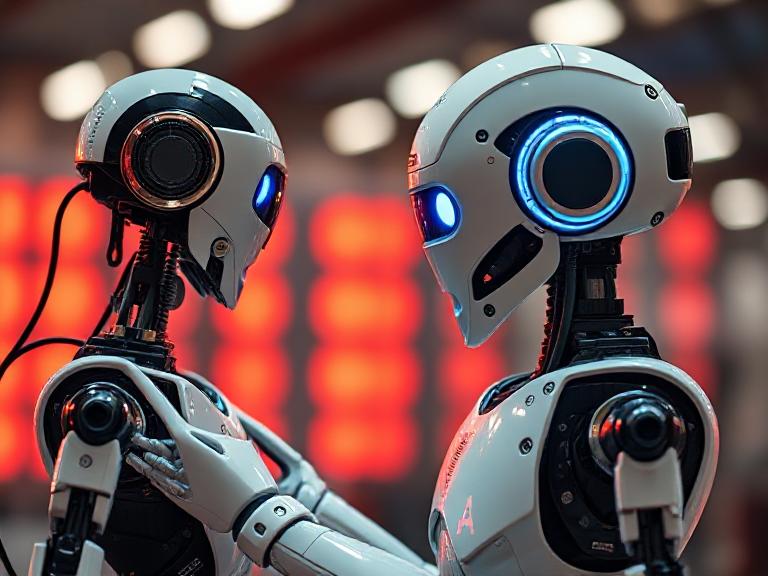
Robotics is essential to creating smart factories as the fourth industrial revolution (Industry 4.0) transforms global industry. To function more effectively, adaptably, and securely, these sophisticated production settings depend on automation, data interchange, and intelligent systems.
Beyond basic robots, smart factories use cloud computing, AI, IoT, and machine learning to build networked, self-optimizing systems. This essay examines the ways in which robots is propelling this change.
What Are Smart Factories?
Using technologies like cloud computing, cyber-physical systems, and AI-powered robots, a smart factory is a highly linked and digitalized manufacturing facility that uses real-time data analysis, decision-making, and process automation.
To understand the technology behind this shift, see our guide on Smart Robotics Explained: A Beginner’s Guide to Intelligent Machines.
The Role of Robotics in Smart Manufacturing
Robots used in industry nowadays are capable of more than just repetitive jobs. AI and machine learning enable them to:
- Adjust to modifications in the manufacturing process
- Work safely with human employees (cobots)
- Use computer vision to perform quality inspections.
- Workflow optimization using real-time data
For instance, robotic arms do a variety of operations in automobile facilities, such as welding, painting, and final inspections, that previously required a full team of professional workers.
How Robotics Enhances Efficiency
- Speed: Robots increase output by working around the clock without becoming tired.
- Precision: Less mistakes made during cutting, soldering, and assembling.
- Data Integration: Robots are capable of gathering and sending analytics-related performance data.
- Customization: Products can be mass-customized thanks to smart systems.
Want to see how AI enhances robotics even further? Read our article on How AI Is Powering the Next Generation of Industrial Robots.
Real-World Examples of Robotics in Smart Factories
- BMW assembles vehicles in real time using AI-guided robots.
- Foxconn uses thousands of robots to make gadgets.
- For predictive maintenance, Siemens combines IoT technology with robotic arms.
Future Trends
- Mobile robots that operate autonomously (AMRs) for dynamic material handling
- Using digital twins to replicate manufacturing settings
- RaaS, or robotics as a service, is a scalable automation system.
For a broader look at this evolution, explore our article From Sci-Fi to Factory Floor: The Real-World Rise of Intelligent Automation.