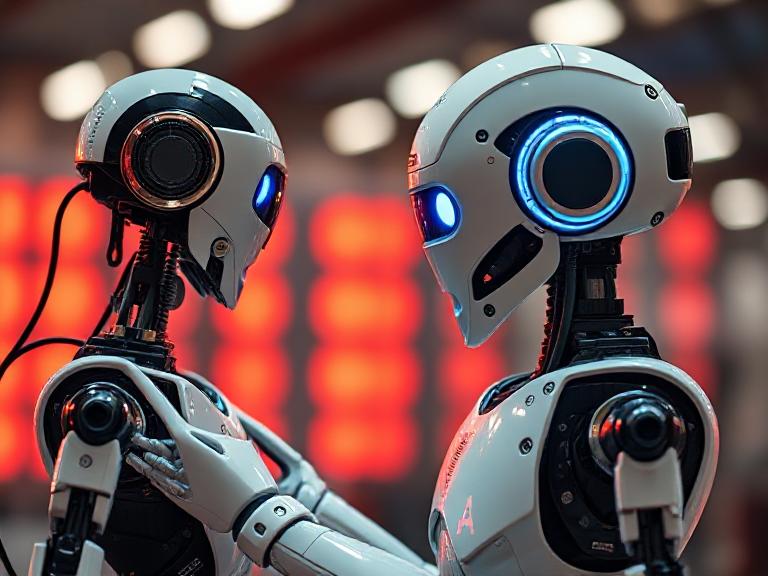

Robots are no longer merely science fantasy devices; they are sentient, real, and coexisting with humans in homes, farms, hospitals, and factories. Greetings from the world of smart robotics, where machines are made to understand, learn, and adapt in addition to moving.
This tutorial provides a clear explanation of smart robots and their operation for those who are interested. It is more important than ever to comprehend the fundamentals of intelligent machines, regardless of your background—student, tech enthusiast, or professional.
What Are Smart Robots?
Smart robots are devices that can carry out difficult tasks either fully or partially on their own by combining hardware (motors, sensors, actuators) and software (AI, machine learning, computer vision). Smart robots learn from data and get better over time, in contrast to traditional robots that follow pre-programmed commands.
For a deeper look at how this intelligence transforms industries, read our article on Advanced Robotics Transforming Industries.
Core Features of Smart Robotics
Artificial Intelligence (AI): Facilitates experience-based learning and decision-making.
Robots are able to “see” and comprehend their surroundings thanks to computer vision.
Real-time data is gathered through sensor integration to enable more intelligent responses.
IoT connectivity allows for improved control and updates by connecting robots to cloud platforms.
Human-Robot Interaction (HRI): Enhances human-machine collaboration.
Where Are Smart Robots Used?
- Manufacturing: Accurate work, quality assurance, and assembly.
- Healthcare: Delivery bots, surgical robots, and rehabilitation aides.
- Logistics: Last-mile delivery and automated warehousing.
- Agriculture: Soil analysis, crop monitoring, and harvesting.
- Retail: Inventory scanners and robots for customer service.
Also check out how AI is powering industrial robots for more industry-specific insights.
Why Smart Robotics Matters
Intelligent robots:
- Boost output
- Cut down on mistakes
- Boost safety at work
- Continue to operate
- Adjust to duties that change
The Future of Intelligent Machines
As intelligent robotics develops, we’ll observe:
- An increase in cooperative robots in human work environments
- Utilizing robotics-as-a-service (RaaS) more
- Intelligent self-governing systems in public areas
Explore the broader trend in our article From Sci-Fi to Factory Floor.