


Introduction
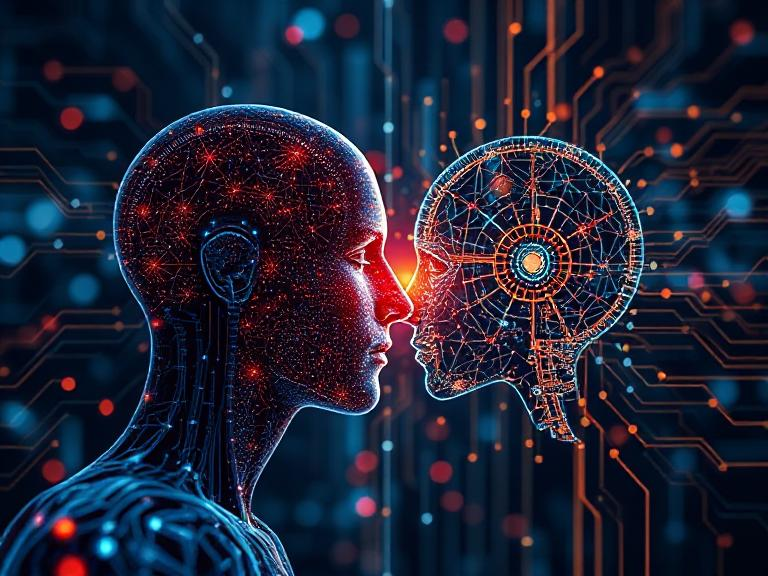
The fast growth of artificial intelligence (AI) is changing how people interact with technology. The concept of human-machine convergence is no longer science fiction; it is becoming a reality as AI systems and human cognition collaborate to improve productivity, decision-making, and issue resolution.
From AI-powered assistants to brain-computer interfaces (BCIs), combining human and machine intelligence opens up new possibilities. This article looks at how human and computer intelligence are merging, the advantages of this partnership, and the future of augmented intelligence.
Understanding the Convergence of Human and Machine Intelligence
Human-machine convergence is the seamless interplay of human intelligence and AI systems, in which both complement each other’s strengths.
- Humans contribute creativity, emotion, and critical thinking.
- Machines offer computational power, automation, and data-driven insights.
By combining these capabilities, corporations, healthcare, and other industries can improve decision-making, issue resolution, and overall efficiency.
Key Technologies Driving Human-Machine Convergence
Brain-Computer Interfaces (BCIs)
- Direct communication between the brain and artificial intelligence-powered technologies.
- Used for medical treatments, neuroprosthetics, and cognitive enhancement.
- Companies such as Neuralink and OpenBCI are shaping the future of brain-machine interaction.
AI-Augmented Decision-Making
- AI algorithms process enormous databases and provide recommendations, whereas people use judgment and experience.
- Used in banking, healthcare, cybersecurity, and business strategy.
Human-in-the-Loop AI (HITL)
- Human control ensures that AI systems produce ethical and dependable results.
- Common in automated employment systems, self-driving cars, and content filtering.
Robotics & Automation
- AI-powered robots help in production, healthcare, and even customer service.
- Cobots (collaborative robots) cooperate with humans to boost productivity.
Natural Language Processing (NLP) & Conversational AI
- Voice assistants, chatbots, and artificial intelligence-powered communication technologies improve human relationships.
- Used for customer service, language translation, and content production.
Benefits of Human-Machine Intelligence Collaboration
- Enhanced Productivity – AI automates repetitive processes, freeing humans to concentrate on higher-level thinking.
- Better Decision Making – Data-driven AI insights paired with human intuition result in smarter strategy.
- Improved Healthcare: AI helps doctors diagnose ailments, plan treatments, and personalize patient care.
- More Ethical AI: Human oversight guarantees that AI systems perform properly and without bias.
- Innovative Problem-Solving – The combination of human creativity and AI processing capacity produces breakthrough discoveries.
Challenges in Human-Machine Convergence
Ethical & Privacy Concerns
- To avoid making unjust decisions, AI must be transparent and unbiased.
- Data privacy and security concerns must be addressed in AI-powered platforms.
Dependence on AI
- Overreliance on AI may impair humans’ critical thinking skills.
- Businesses must strike a balance between automation and human involvement.
Job Displacement vs. Job Creation
- Automation may eliminate some jobs, but it also creates new ones in AI management and system monitoring.
Integration Complexity
- Organizations must spend in training people to operate effectively with AI technology.
The Future of Human and Machine Intelligence Convergence
As technology progresses, the relationship between humans and machines will become increasingly seamless. Future developments could include:
- Advanced BCIs enable thought-controlled devices.
- AI-driven creativity involves technology assisting with art, music, and writing.
- Fully autonomous systems that work with people in research, science, and space exploration.
Conclusion
The merger of human and machine intelligence is transforming industries, improving decision-making, and accelerating innovation. As AI advances, its role in boosting human intelligence will expand. The challenge is to achieve a balance between harnessing AI’s capability and keeping human control, innovation, and ethics important.
Accepting this collaboration will open up previously unheard-of potential in all industries, ushering in the next stage of technological growth.


