


Introduction
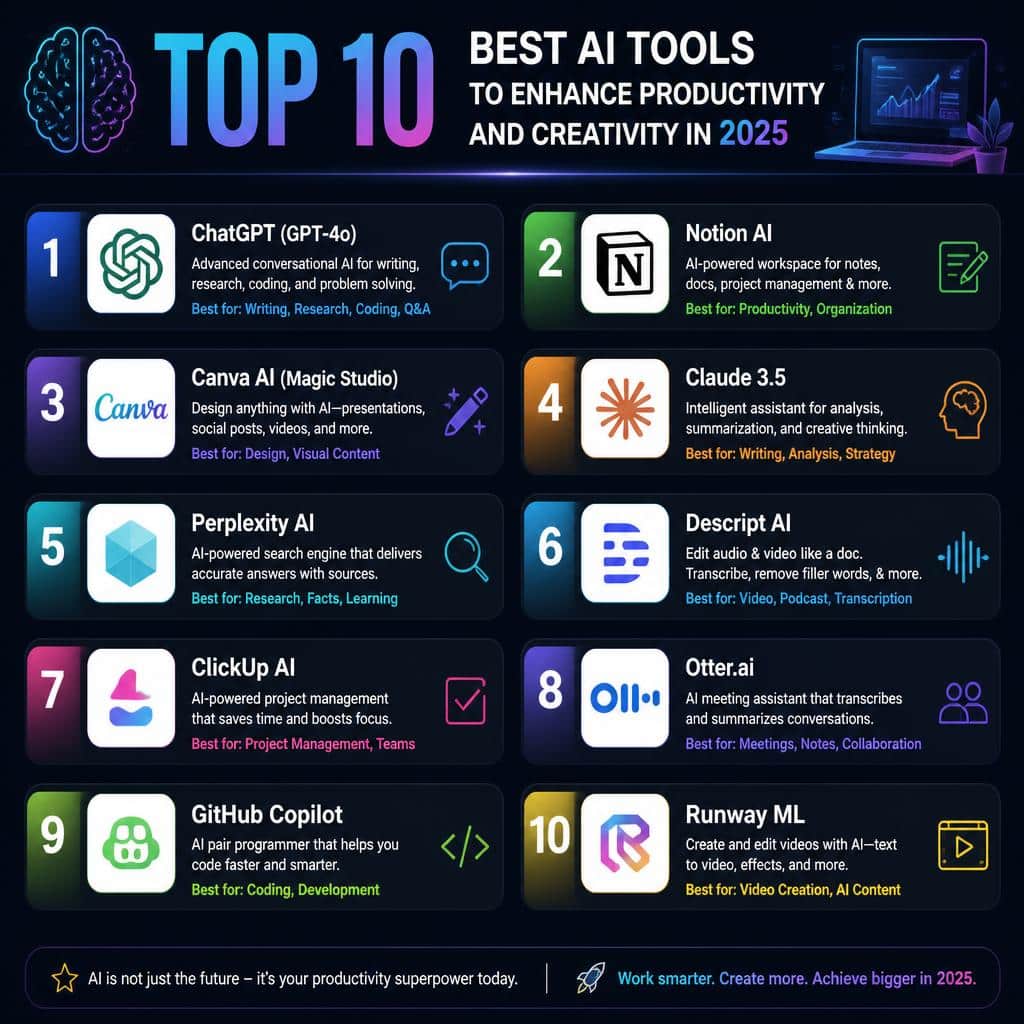
The AI tools landscape has matured considerably, moving past the initial wave of novelty chatbots into genuinely specialized tools built for specific productivity and creative workflows. With so many options available, knowing which tools actually deliver value for specific tasks matters more than trying every new release. Here’s an updated look at ten AI tools genuinely worth using in 2026.
1. ChatGPT
Best for: General-purpose assistance across writing, brainstorming, and problem-solving.
ChatGPT remains one of the most versatile starting points for a huge range of tasks, from drafting emails to working through complex problems step by step. Its broad capability makes it a reasonable default choice when you’re not sure which specialized tool a task actually needs.
2. Claude
Best for: Long-form writing, careful reasoning, and coding assistance.
Claude has built a strong reputation particularly for writing quality, nuanced reasoning on complex topics, and coding support, making it a preferred choice for users who prioritize thoughtful, well-structured output over raw speed.
3. Midjourney
Best for: High-quality AI image generation for creative and design work.
Midjourney continues to be a top choice for artists, designers, and marketers needing striking, stylistically distinctive AI-generated imagery, particularly for concept art and creative visual exploration.
4. Notion AI
Best for: Integrated note-taking, project management, and content organization.
Notion AI’s strength comes from being built directly into a tool many people already use for organizing work, letting users summarize notes, draft content, and organize projects without switching to a separate AI platform.
5. GitHub Copilot
Best for: AI-assisted coding directly within a developer’s existing workflow.
Copilot’s deep integration into popular code editors makes it a go-to tool for developers, offering real-time code suggestions and completions that speed up development without disrupting an existing coding workflow.
6. Runway
Best for: AI video generation and editing.
Runway has become a leading choice for AI-assisted video creation, offering both generative video capabilities and AI-powered editing tools that speed up production for creators and marketing teams.
7. Perplexity AI
Best for: Research with cited, verifiable sources.
Unlike general chatbots, Perplexity is built around search with transparent citations, making it particularly valuable for research tasks where knowing exactly where information comes from matters.
8. QuillBot
Best for: Paraphrasing, grammar checking, and academic writing support.
QuillBot’s focused approach to rewriting and refining text makes it a strong choice specifically for improving existing writing, rather than generating entirely new content from scratch.
9. Descript
Best for: AI-powered audio and video editing through text-based transcription.
Descript’s approach of editing audio and video by editing a text transcript has made it a favorite among podcasters and video creators who want an intuitive, non-technical editing workflow.
10. Gamma
Best for: AI-generated presentations and documents.
Gamma turns text prompts or outlines into designed presentations and documents quickly, reducing the time typically spent on formatting and layout for common business and educational presentations.
How to Choose the Right Tools for Your Needs
- General writing and problem-solving: ChatGPT or Claude
- Visual creative work: Midjourney or Runway
- Organizing work and notes: Notion AI
- Software development: GitHub Copilot
- Research requiring citations: Perplexity AI
- Improving existing writing: QuillBot
- Audio/video content creation: Descript
- Quick presentations: Gamma
A Note on Using AI Tools Effectively
The most productive approach isn’t necessarily using every tool on this list — it’s identifying the two or three that genuinely address your most frequent, time-consuming tasks and learning them well, rather than spreading attention thin across many tools used only occasionally. Most of these tools also benefit from clear, specific prompts; investing a little time learning how to communicate effectively with a given tool usually pays off more than switching tools frequently looking for better results.
Conclusion
AI tools in 2026 span a genuinely wide range of specialized use cases, from general-purpose assistants to highly focused creative and productivity tools. Rather than chasing every new release, identifying which specific tasks eat up the most time in your work or creative process — and matching that to the tool genuinely built for it — tends to produce far more meaningful productivity gains than broad, unfocused adoption.
FAQs
Q:01. Which AI tool is best for general everyday use? ChatGPT and Claude are both strong general-purpose options, handling a wide range of writing, brainstorming, and problem-solving tasks capably for most everyday needs.
Q:02. Are these AI tools free to use? Most offer functional free tiers with usage limits, with paid plans unlocking higher usage limits, advanced features, or priority processing for regular users.
Q:03. Which AI tool is best for coding? GitHub Copilot is specifically built for coding, integrating directly into popular code editors, while Claude also offers strong coding assistance for more conversational, explanation-focused development help.
Q:04. Can AI tools help with video editing? Yes, Runway offers AI-powered video generation and editing, while Descript enables intuitive video editing through text-based transcript editing.
Q:05. How many AI tools should I actually use regularly? Most people find more value focusing on two or three tools that address their most frequent, time-consuming tasks well, rather than trying to use many different tools only occasionally.


