

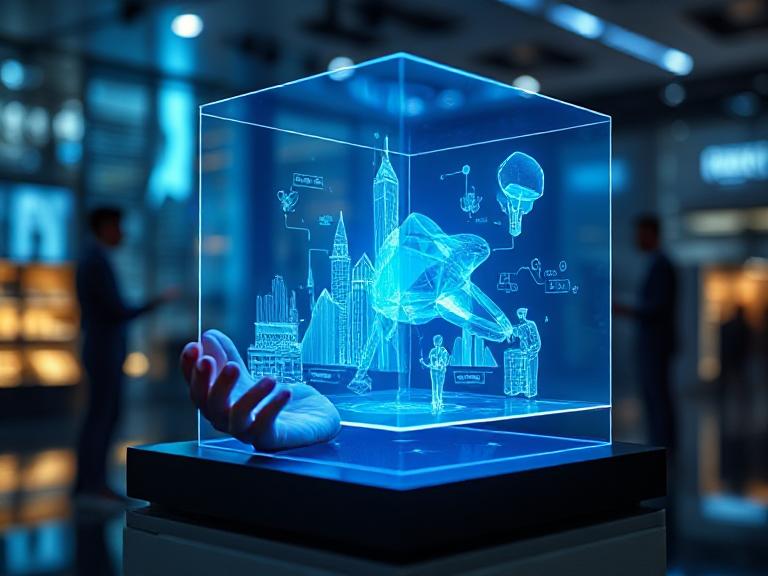

Beyond science fiction, 3D holographic technology is currently driving innovation in a variety of real-world businesses. This immersive visual communication tool is changing how people interact, enjoy, and cooperate in a variety of settings, including corporate boardrooms and concert stages.
In our previous piece, The Future of Visual Communication, we explored how holography is evolving. Now, let’s dive deeper into practical use cases of 3D hologram technology—from entertainment to enterprise.
Entertainment & Media
- Live Events & Concerts: Using 3D holograms, artists such as Tupac and ABBA have “performed” after their deaths.
- Immersion Theater: Dynamic sceneries and characters are created using holographic projections.
- Virtual Influencers & Avatars: 3D holograms are now used by brands for digital campaigns and fan engagement.
Enterprise Communication & Remote Collaboration
- Holographic Meetings: Real-time, life-sized presence for corporate communication is made possible by platforms such as PORTL and ARHT Media.
(See: How 3D HoHealthcarelograms Are Redefining Remote Collaboration)
- CEOs can attend international gatherings “in person” without having to travel thanks to executive telepresence.
Healthcare
- Medical Education: In a communal holographic environment, students can investigate 3D organs and surgical techniques.
(More on this in: Holograms in Healthcare)
- Remote Surgery Guidance: During real-time surgeries, surgeons work together using holographic overlays.
Education & Training
- Engagement in the Classroom: Holograms bring historical personalities or scientific models to life.
- Corporate Training: Learning through realistic scenarios for safety procedures, retail, or aviation.
Retail & Advertising
- Interactive Product Demos: Holographic displays allow customers to examine product characteristics.
- Window Displays: Without screens, holograms increase engagement and draw foot traffic.
Manufacturing & Engineering
- Prototyping: Without creating physical models, engineers may see 3D prototypes.
- Maintenance Training: Life-size holographic guidance is used to instruct technicians on machinery.
Why Holograms Matter
Holograms offer a headset-free, multi-user, immersive approach to engagement, training, and teamwork. They don’t isolate individuals or call for pricey wearable technology like AR and VR do.
Explore this debate further in:
👉 Can 3D Hologram Tech Replace AR and VR Headsets?
What’s Next?
As the cost and scalability of 3D holographic devices decrease, anticipate:
- increased use among SMBs
- AI-powered holographic helpers
- interoperability across platforms for current content and video conferencing tools


