
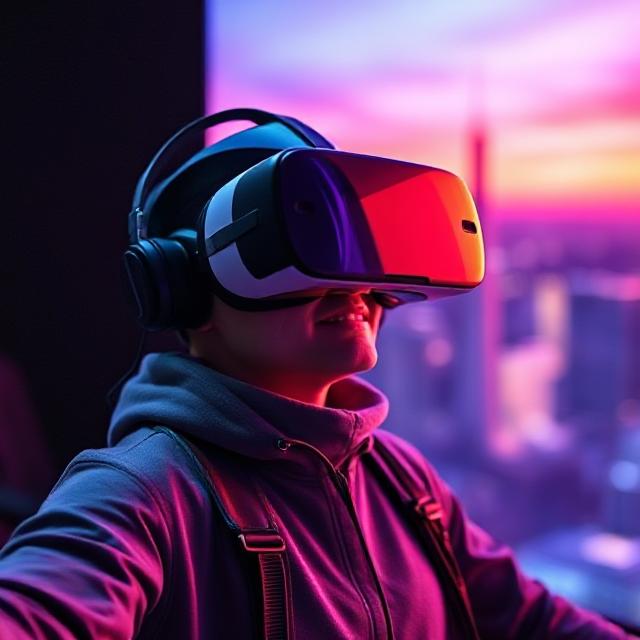

Introduction
Stepping into 2025, virtual reality (VR) is no longer just for gamers—it’s redefining how we work, learn, create, and connect. With more advanced hardware and brilliant apps, VR is becoming part of everyday life. If you’ve ever wondered which headsets and experiences deliver real immersion, you’re in the right place.
What Makes a Great VR Experience in 2025
To get true “immersive VR,” here’s what matters:
- Visual fidelity: High resolution, wide field of view, and smooth frame rates.
- Comfort and ergonomics: Lightweight design, good fit, less motion sickness.
- Tracking & controllers: Precise motion tracking, intuitive controllers, possibly hand or eye tracking.
- Content ecosystem: Rich apps, games, social VR, professional tools.
- Affordability vs. performance: Not everyone needs flagship specs; balance is key.
Top VR Headsets to Consider in 2025
Here are some of the best VR headsets you can choose from this year, depending on use case and budget:
| Headset | Standout Features | Best For |
|---|---|---|
| Meta Quest 3 | Standalone, high-resolution display, passthrough AR mode | Casual gamers, newcomers, portable setup |
| PlayStation VR2 | OLED screens, eye tracking, haptic feedback | Console gamers, immersive story-driven titles |
| Valve Index 2 (if released) | Ultra-wide field of view, premium controllers, high frame rate | Enthusiasts, developers |
| HTC Vive XR Elite / Vive Pro 2 | Mixed reality, enterprise uses, high pixel density | Simulations, training, professional design |
| Pimax Crystal | Very wide FOV (~120–140°), 4K panels, strong visual clarity | Sim racers, flight sim fans, immersion seekers |
Must-Have VR Apps & Experiences
Here are standout apps and VR ecosystems in 2025 that deliver immersive experiences:
- VR Social and Metaverse Spaces: Horizon Worlds (Meta), VRChat, and Neos. Great for socializing, events, collaborative work.
- Fitness & Wellness: Supernatural, FitXR, and Peleton VR—blend exercise and immersive scenery.
- Educational & Training Simulators: EngageXR, Labster, and surgical training tools that let students practice in risk-free virtual environments.
- Storytelling & Cinematic VR: Apps like Within and Wander offer narrative-rich VR films or virtual tours of real places.
- Gaming Experiences: Half-Life: Alyx (still relevant), Resident Evil 4 VR, new indie titles using motion and immersion in unique ways.
Comparing Standalone vs. PC/Console VR
| Aspect | Standalone (All-in-One) | PC / Console VR |
|---|---|---|
| Portability | Highly portable, no wires. | Requires powerful GPU/console and tethering or wireless streaming. |
| Performance / Graphics | Good visuals, but hardware limits. | Highest fidelity and best experience with top-end graphics. |
| Content Library | Strong app ecosystem, mostly optimized for mobile-class hardware. | Broader library, AAA games, mods, etc. |
| Price | Usually more affordable upfront. | Higher cost — hardware, accessories, maintenance. |
Real-World Case Study: VR in Workplace Training
In 2025, a large U.S. hospital group started using VR headsets for surgical staff training. Residents practiced complex procedures in VR simulation over several weeks. Outcomes showed reduced error rates and faster procedure times. The immersive aspect helped build muscle memory and confidence before working on real patients.
Tips for Choosing the Right VR Gear
- Define purpose first: Gaming, fitness, professional work, social use?
- Try before buying: Demo units reduce risk of discomfort or disappointment.
- Check ecosystem support: Are updates regular? Are there many apps you want?
- Comfort matters: Head strap, weight, lens adjustment—try it on, if possible.
- Budget for accessories: Controllers, tracking stations, extra headstrap, even cleaning supplies.
VR Trends to Watch in 2025
- Haptic feedback and full-body tracking becoming more accessible.
- Wireless and tetherless VR improving with better image streaming and battery tech.
- Mixed reality blending VR + AR more seamlessly.
- More immersive audio (spatial audio) as standard, better headset speakers.
- Social and collaborative VR tools for remote working, education, and events.
Conclusion
Virtual reality in 2025 is pushing boundaries. Whether you want ultimate realism, engaging fitness routines, or new ways to work and learn, today’s headsets and apps can deliver. The right pick depends on what kinds of experiences you value most.
Call-to-action: Curious which VR setup fits you best? Make a wish list of your must-have features, test a couple of headsets, and dive into a few apps this week—you’ll know quickly what truly feels immersive.
Related Reading.
- Future of Conversational BI: Predictive Insights, Real-Time Analytics, and Voice-Driven Workflows.
- Design AI: Transforming Creativity with Artificial Intelligence
- Beyond GPT: The Next Generation of Generative AI Models in 2025
FAQs
1. Is VR in 2025 affordable for casual users?
Yes—standalone headsets like Quest 3 have lowered the entry barrier, offering strong visuals and content without needing expensive PCs.
2. Will motion sickness still be a problem?
Developers have improved frame rates, reduced latency, and designed better motion comfort. Still, individual sensitivity varies, so take breaks and adjust settings.
3. Do I need a powerful PC for VR?
If you want high-end graphics and high frame rates, yes. But many standalone or cloud-streamed options deliver excellent experiences without a top-tier PC.
4. What should I prioritize: visuals, comfort, or content?
All matter. But comfort and content often matter more in long sessions—if you can’t wear the headset comfortably or don’t have things you enjoy doing, even the best visuals won’t help much.