
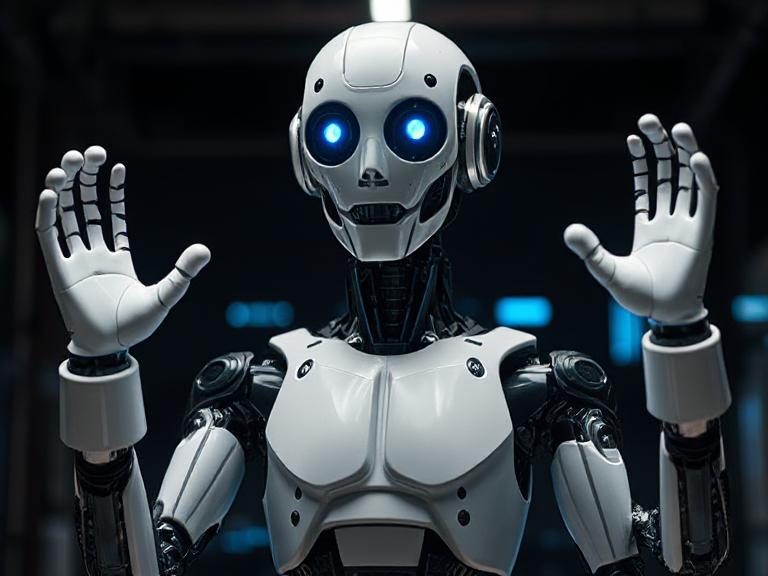

Introduction.
The robotics revolution is no longer limited to machines following scripted commands. Autonomous roboticsmachines that can perceive, decide, and act without human intervention—are redefining productivity across industries. These intelligent systems are now capable of navigating unpredictable environments, learning from data, and performing complex tasks with minimal oversight.
What Are Autonomous Robots?
Autonomous robots are equipped with sensors, AI algorithms, and real-time data processing capabilities that allow them to function independently. Unlike traditional robots that rely on fixed programming, these robots adapt their actions based on environmental feedback.
Key components include:
- Edge Computing
- Artificial Intelligence (AI)
- Machine Learning (ML)
- Computer Vision
- Lidar and GPS
Real-World Applications.
Autonomous robotics are now operational across several industries:
Defense
Unmanned aerial vehicles (UAVs) and ground robots are deployed for reconnaissance, logistics, and bomb disposal.
Manufacturing
Autonomous mobile robots (AMRs) streamline intralogistics and handle repetitive tasks like material handling with high efficiency.
Agriculture
Drones and autonomous tractors assist in precision farming, crop monitoring, and soil analysis.
Healthcare
Robots assist in disinfection, delivery of medical supplies, and even surgery—with minimal supervision.
Logistics
Companies like Amazon use autonomous robots in warehouses for inventory management, navigation, and order fulfillment.
Benefits of Moving Beyond Human Supervision.
Cost Efficiency
Over time, reduced labor costs and higher throughput make autonomous systems a worthy investment.
24/7 Operation
Autonomous robots don’t need breaks, reducing downtime.
Increased Safety
They can operate in hazardous environments where human presence would be risky.
Enhanced Accuracy
Real-time data processing reduces human error and improves precision.
Challenges and Considerations.
Despite the promise, several challenges remain:
Legal and Regulatory Frameworks
Governments are still catching up with laws surrounding autonomous technologies.
Ethical Concerns
How much autonomy is too much? Should robots make life-impacting decisions?
Job Displacement
Automation can reduce the need for human labor, leading to socioeconomic disruption.
Security Risks
Autonomous systems can be vulnerable to hacking or malfunctions.
Future Outlook.
Autonomous robotics is rapidly advancing with improvements in 5G connectivity, AI algorithms, and edge computing. As trust and capability grow, expect a future where these systems become standard in homes, cities, and workplaces.
Conclusion.
Autonomous robotics marks a paradigm shift in how we think about machines and work. By moving beyond human supervision, we are stepping into a future of intelligent, adaptive, and efficient systems that will reshape every major industry.
Related Reading.
- Will Robots Become Our Coworkers or Our Competitors?
- Noty AI – The Ultimate AI-Powered Meeting Transcription & Productivity Tool
- Polyfunctional Robots in Healthcare: Transforming Patient Care and Efficiency
FAQs.
Q:1 How are autonomous robots trained?
They use machine learning algorithms trained on massive datasets, often in simulation environments before real-world deployment.
Q:2 What is the difference between autonomous and traditional robots?
Autonomous robots make decisions based on data, whereas traditional robots follow predefined instructions.
Q:3 Are autonomous robots safe to use in public spaces?
With proper programming and safety protocols, they are increasingly being used in public settings like hospitals and airports.
Q:4 Will autonomous robots replace human workers?
They may replace some roles but also create new jobs in robot maintenance, AI development, and systems monitoring.
Q:5 What industries will benefit the most from autonomous robots?
Manufacturing, logistics, agriculture, and healthcare are currently seeing the greatest impact.