

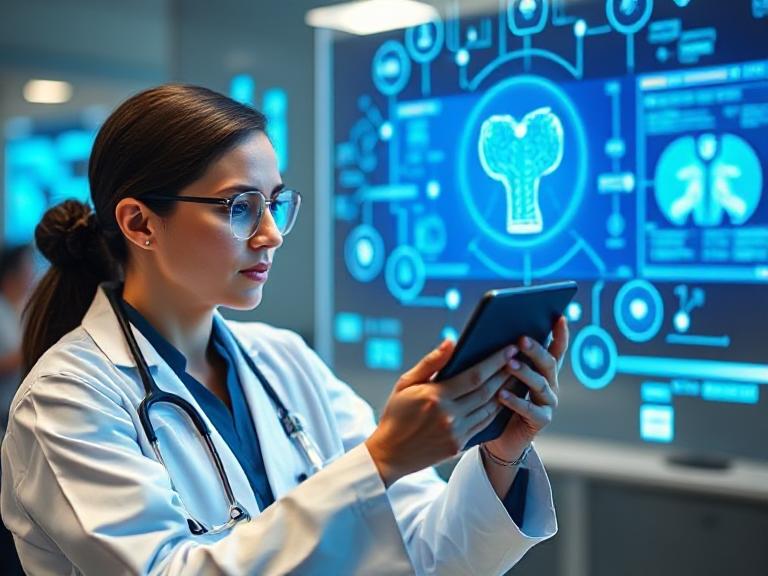

Intelligent applications—AI-powered solutions that are revolutionizing the way we diagnose, treat, and manage health—are at the core of the digital change taking place in the healthcare sector. Better patient outcomes, improved operational efficiency, and more individualized treatment are made possible by these smart systems’ integration of machine learning, data analytics, and real-time insights.
What Are Intelligent Healthcare Applications?
Software solutions that use artificial intelligence (AI), machine learning (ML), natural language processing (NLP), and the Internet of Things (IoT) to gather, examine, and act upon patient data are referred to as intelligent apps in the healthcare industry.
These systems provide a significant improvement over static databases and traditional EHRs since they are proactive, predictive, and able to support decisions in real time.
Key Use Cases in Healthcare
Predictive Diagnostics
Even before symptoms appear, ML algorithms may identify trends in test findings, medical imaging, and patient histories to forecast conditions like cancer or heart failure.
Personalized Treatment Plans
Precision medicine for complicated disorders is made possible by AI, which customizes medicines based on lifestyle, genetic information, and previous reactions.
Virtual Health Assistants
AI and NLP-powered apps assist with real-time patient inquiries, prescription reminders, and chronic condition monitoring.
Smart Scheduling and Workflow Automation
Intelligent systems are being used by hospitals to better allocate staff, minimize wait times, and maximize patient flow.
Remote Monitoring & Telehealth
Mobile apps and smart wearables monitor vital signs, sync data to cloud servers, and notify medical professionals of irregularities.
The Impact on Patient Care
- Faster diagnosis
- Reduced human error
- Lower hospital readmission rates
- Improved patient engagement and adherence


