
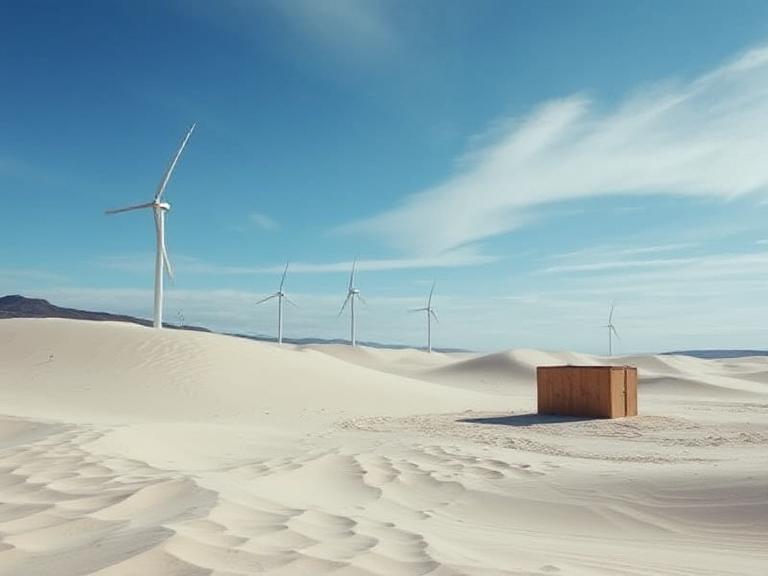

Finland is leading a quiet yet powerful energy revolution—using sand as a thermal battery to store renewable energy. This innovation offers a sustainable, cost-effective solution to one of the biggest challenges in clean energy: long-term storage. Developed by Finnish startup Polar Night Energy, sand battery systems are proving that even the simplest materials can drive the future of green technology.
What Is a Sand Battery?
A sand battery is a thermal energy storage system that stores excess electricity—mostly from renewable sources like wind and solar—as heat in large amounts of sand. The sand is heated to temperatures of 500–600°C and retains that heat for extended periods with minimal loss. When needed, this thermal energy is released to warm water, which is then circulated through district heating systems.
Why Finland Chose Sand
Finland experiences long, dark winters with high heating demands. Traditional solar storage isn’t practical year-round, so the country needed an alternative that could store energy for months. Sand is cheap, abundant, and efficient at holding heat, making it the perfect solution for seasonal thermal storage. Moreover, it doesn’t degrade over time like chemical batteries.
How It’s Used in Real Life
In Kankaanpää, a small Finnish town, a sand battery installed by Polar Night Energy powers the local district heating network. During summer, excess solar and wind power is used to heat the sand. In winter, the system provides warm water to heat homes. This system reduces dependency on fossil fuels and supports energy security during extreme weather.
Environmental Impact and Efficiency
Sand batteries have a lower carbon footprint than lithium-ion storage and don’t require rare minerals. They’re also incredibly efficient at retaining heat for long durations. This means energy harvested in July can be used to heat buildings in January—without major losses or emissions.
Looking to the Future
Although sand batteries currently store energy as heat, researchers are exploring how to convert this heat back into electricity efficiently. If successful, this could make sand-based systems a dual-purpose energy solution. Finland’s success offers a blueprint for other cold regions and countries with excess renewable energy looking to store it economically.
Conclusion
Finland’s sand battery innovation proves that practical, scalable green solutions don’t always require complex materials. Sometimes, nature itself holds the answer. As more countries seek carbon-neutral systems, sand batteries could become a cornerstone of resilient and sustainable energy infrastructures worldwide.
Related Reading.
- Finland’s Sand Battery Technology: A Game-Changer for Clean Energy
- From Dash Buttons to Robo-Advisors: The Evolution of Machine Customers.
- When Algorithms Shop: What Businesses Must Know About Non-Human Buyers.
FAQs
1. What is the purpose of a sand battery?
To store excess renewable energy as heat for long-term use, especially in district heating.
2. How long can sand batteries store energy?
For several months, with minimal energy loss.
3. Are sand batteries environmentally friendly?
Yes, they use non-toxic, abundant materials and avoid the environmental issues of chemical batteries.
4. Where are sand batteries most effective?
In cold climates with district heating systems and seasonal energy needs.
5. Can sand batteries generate electricity?
Currently, they are optimized for heat storage, but research is underway to enable electricity generation.
6. How expensive are sand battery systems?
They are relatively low-cost compared to other storage technologies due to the cheap material and simple design.