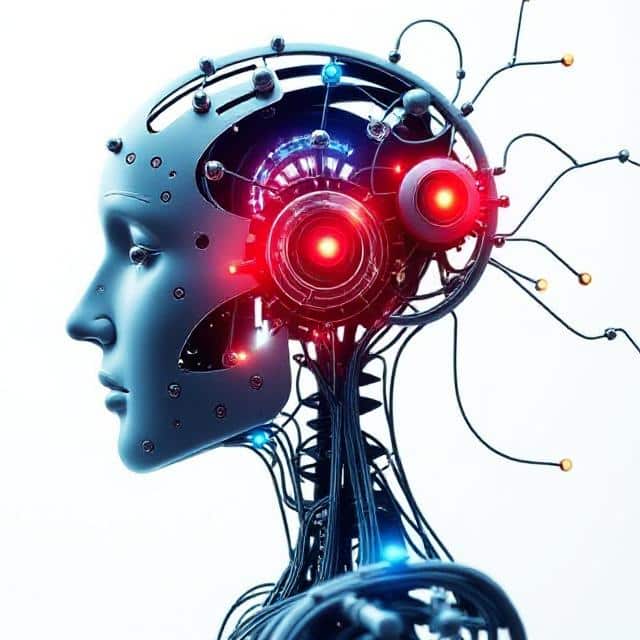
Introduction to Reactive Machines
Reactive machines are the earliest and most basic form of artificial intelligence. They operate solely on present inputs and do not store or learn from past experiences. Despite their simplicity, these systems remain highly relevant in today’s advanced AI landscape.
How Reactive AI Works
These systems follow pre-programmed rules and respond instantly to data without memory. Each decision is made in real-time, ensuring consistent and fast output. Their lack of memory makes them ideal for stable, repetitive environments.
Examples of Modern-Day Reactive Machines
Reactive AI is commonly found in everyday tools and systems. Smart appliances, voice assistants with limited responses, automated doors, and basic recommendation engines are all powered by reactive logic. These systems continue to power many IoT devices and embedded systems.
Benefits of Reactive Machines in 2025
Their speed, reliability, and predictability make reactive machines perfect for tasks requiring instant decisions. They consume less computational power, are easy to deploy, and rarely crash due to data overload or faulty memory usage.
Where Reactive AI Shines Today
Industries like healthcare, automotive, and manufacturing benefit from reactive AI. Real-time monitoring systems, safety alarms, and control units depend on fast, rule-based AI logic. In environments where precision and stability matter more than adaptability, reactive AI leads.
Limitations Remain
Reactive AI cannot learn or adapt, which limits its application in dynamic scenarios. It cannot personalize experiences or handle complex data patterns. However, these limitations also make them secure and predictable, minimizing risks in critical systems.
The Hybrid Approach
Modern AI solutions often combine reactive components with learning models. For example, an AI may use reactive logic for immediate actions while storing data separately for long-term analysis. This hybrid method leverages the strengths of both reactive and learning AI.
Conclusion
Reactive machines may not learn or evolve, but their role in the AI ecosystem remains strong. Their simplicity, efficiency, and dependability make them indispensable in applications where fast and accurate responses are essential. In a world chasing complex AI, sometimes the simplest systems still offer the greatest value.
Related Reading.
- Smart, Aware, and Adaptive: The Rise of Intelligent Applications in 2025.
- Reactive Machine AI Explained: The Origins of Artificial Intelligence.
- The Economics of Sand Battery Systems: Are They Worth the Investment?
FAQs
Q:1What is a reactive machine in AI?
A reactive machine is an AI that only responds to present input without memory or learning ability.
Q:2Why are reactive machines still used today?
They are fast, stable, and ideal for simple, repetitive tasks where learning isn’t needed.
Q:3What are some common examples?
Smart thermostats, factory sensors, and certain voice assistants use reactive AI.
Q:4Are reactive machines part of modern AI systems?
Yes, they are often integrated into hybrid AI systems for real-time responsiveness.
Q:5Do reactive machines have memory?
No, they process only current inputs and cannot store past data.