

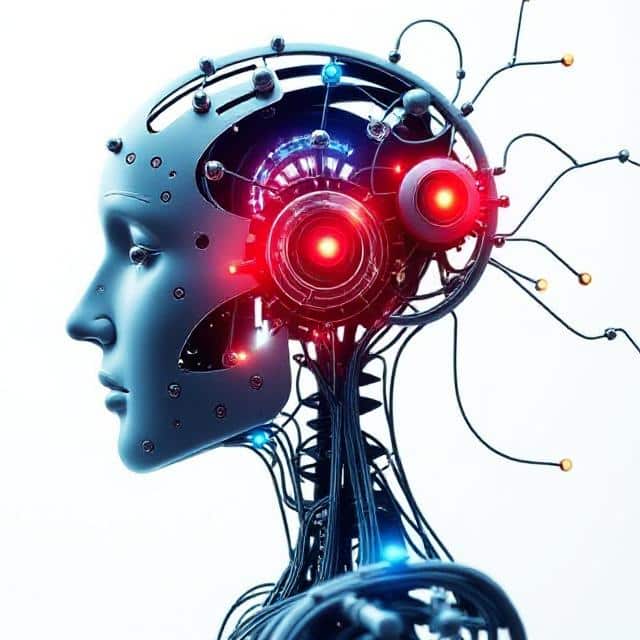

What Is Reactive Machine AI
Reactive Machine AI is the most basic form of artificial intelligence. It works by responding to current inputs without storing past data or learning from experience. These systems follow a strict set of rules and provide consistent outcomes in predictable environments.
How Reactive Machines Work
Reactive AI systems operate based on real-time data. They analyze inputs and produce outputs instantly. There is no memory or database involved, meaning each interaction is independent of any previous ones. These machines are designed for speed, reliability, and repetitive accuracy.
Examples of Reactive Machine AI
Some popular examples include:
- IBM’s Deep Blue, which defeated world chess champion Garry Kasparov
- Basic spam filters that detect specific keywords
- Voice assistants that answer predefined questions
- Smart thermostats that respond to current temperature settings
These systems are useful in environments where tasks are repetitive and decisions do not require past context.
Advantages of Reactive Machine AI
Reactive machines are extremely fast and efficient. They are also less vulnerable to errors that may arise from conflicting or outdated memory. Their simplicity makes them reliable and easy to deploy, especially in industries like manufacturing, automation, and consumer electronics.
Limitations of Reactive AI
One major drawback is that these systems cannot learn or adapt. They cannot improve over time or handle unexpected changes. As a result, they are limited to narrow tasks and require frequent updates if new scenarios arise.
Role in the History of AI
Reactive AI is considered the foundation of artificial intelligence. Early developments in AI focused on creating machines that could mimic specific human decision-making processes using fixed rules. These early models paved the way for more advanced systems like machine learning and deep learning.
Why Reactive AI Still Matters Today
Despite the rise of learning-based AI, reactive machines continue to play a vital role. Their simplicity, speed, and reliability make them ideal for edge computing, IoT devices, and safety-critical applications where real-time responses are essential.
Conclusion
Reactive Machine AI may be the simplest form of artificial intelligence, but it remains a critical part of AI’s evolution. Understanding its structure and limitations gives us valuable insight into how far AI has come—and where it’s headed.
Realated Reading.
- Reactive Machine AI: The Foundation of Artificial Intelligence
- The Economics of Sand Battery Systems: Are They Worth the Investment?
- Can Sand Batteries Replace Fossil Fuel Boilers in Industry?
FAQs
Q:1What is a reactive machine in AI?
A reactive machine is an AI system that responds only to current input without memory or learning capabilities.
Q:2Can reactive AI systems learn from past data?
No, reactive AI lacks memory and cannot learn from previous interactions.
Q:3Are reactive machines still used today?
Yes, they are used in basic automation systems, smart devices, and edge computing where speed and consistency are essential.
Q:4Is reactive AI the same as weak AI?
Not exactly. Reactive AI is a type of weak AI, which refers to systems designed for narrow tasks.
Q:5What is an example of a reactive machine?
IBM’s Deep Blue chess-playing computer is a classic example of a reactive machine.


