

Introduction: The Dawn of Intelligent Healthcare
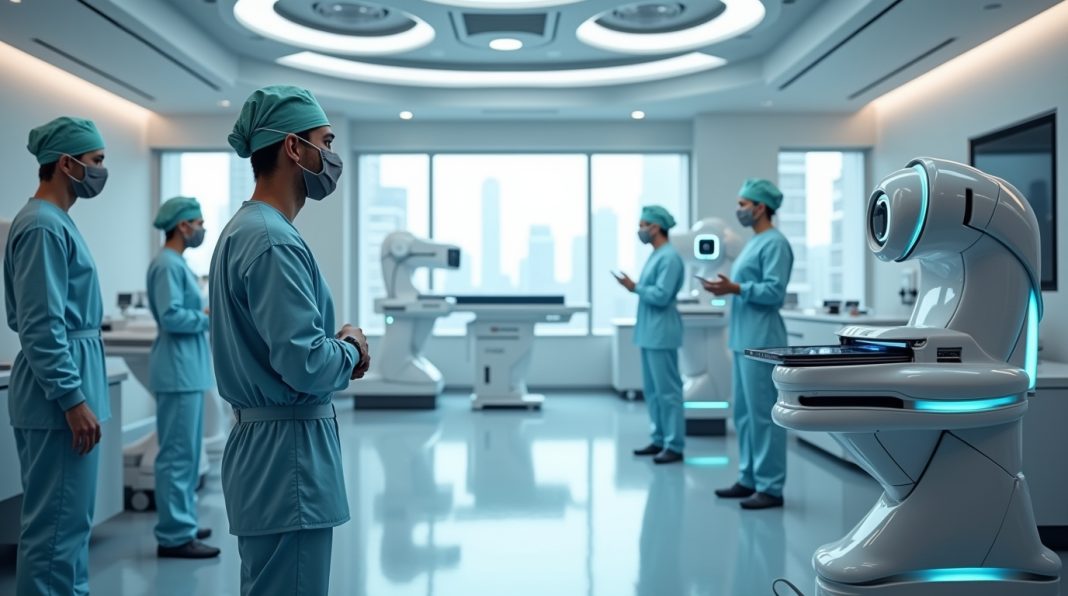
In 2025, hospitals around the world are entering a new era—one defined by precision, automation, and artificial intelligence. AI-powered surgical robots are no longer futuristic concepts; they’re now essential tools reshaping how surgeries are planned, performed, and perfected.
From robotic arms guided by real-time data to systems capable of learning from every procedure, AI robots are transforming the hospital environment into a smarter, safer, and more efficient space.
The Evolution of Robotic Surgery
Two decades ago, surgical robots were limited to assisting in minimally invasive procedures. Today, they’ve evolved into AI-driven systems capable of making split-second decisions and assisting surgeons with unmatched precision.
These robots don’t just follow instructions—they analyze data, predict risks, and adapt in real time, helping surgeons achieve near-perfect accuracy in even the most complex operations.
How AI Robots Are Changing the Operating Room
The integration of AI and robotics in healthcare has redefined every aspect of surgical practice. Here’s how:
1. Enhanced Surgical Precision
AI algorithms process imaging data in real-time, allowing robotic arms to move with sub-millimeter accuracy. This precision reduces tissue damage, blood loss, and recovery time.
2. Data-Driven Decision Support
During surgery, AI systems can analyze thousands of data points per second—guiding surgeons on the safest paths, identifying anomalies, and preventing potential errors.
3. Predictive Maintenance and Planning
Before an operation begins, AI tools use patient history and 3D modeling to create the most effective surgical plan. This predictive approach minimizes complications and improves patient outcomes.
4. Real-Time Learning
Every procedure performed adds to the AI’s knowledge base. The more surgeries it assists in, the smarter it becomes—continuously refining its accuracy and efficiency.
Case Study: How Hospitals Are Benefiting from AI Robots
Cleveland Clinic (USA) introduced AI-assisted robotic systems in 2024 to enhance cardiac and orthopedic surgeries. Within one year:
- Post-surgery recovery times improved by 35%.
- Complication rates dropped by 22%.
- The hospital performed 30% more surgeries without adding new staff.
These results highlight how AI integration not only saves lives but also boosts hospital efficiency and patient satisfaction.
Beyond Surgery: AI Robots in Hospital Operations
The impact of AI robotics extends beyond the operating room.
- Logistics & Supply Chain: Robots automate the delivery of medicines, sterilized tools, and lab samples.
- Sanitization: Autonomous disinfection robots keep surgical suites germ-free 24/7.
- Diagnostics: AI-powered imaging robots assist radiologists by detecting diseases at early stages.
- Rehabilitation: Robotic exoskeletons help patients recover faster post-surgery.
This interconnected system of smart robots ensures hospitals run more efficiently and safely than ever before.
Key Advantages of AI Robots in Modern Hospitals
- Higher Accuracy: Eliminates human tremors and fatigue-related errors.
- Reduced Recovery Time: Smaller incisions and better precision speed up healing.
- Improved Access: Remote surgeries allow global specialists to assist in real time.
- Operational Efficiency: Automation frees up medical staff for higher-priority care.
- Better Patient Outcomes: Fewer complications and enhanced post-surgery monitoring.
Challenges and Ethical Concerns
While the benefits are impressive, hospitals must navigate several challenges before full-scale adoption:
- High Implementation Costs: Initial setup and maintenance can exceed millions.
- Training Requirements: Surgeons and technicians must learn complex new systems.
- Cybersecurity Risks: Protecting patient data from potential breaches is critical.
- Accountability: Legal frameworks are still evolving around AI-assisted decision-making.
Balancing innovation with ethics will be key to the responsible growth of AI in surgery.
The Future of AI-Driven Hospitals
By 2030, experts predict that over half of all surgical procedures will involve robotic assistance. The next generation of AI robots will include:
- Autonomous Surgical Units capable of performing standard procedures independently.
- AI Voice Integration allowing surgeons to control systems hands-free.
- 5G-Powered Telesurgery connecting top surgeons to patients in remote regions.
These advancements point to a future where hospitals become fully digital ecosystems, blending human expertise with machine intelligence.
Conclusion: A Smarter, Safer Era of Healthcare
The rise of AI-powered surgical robots marks a turning point in medical history. Hospitals are evolving into intelligent hubs where technology and humanity work hand in hand to deliver superior care.
As AI continues to refine precision, reduce risks, and enhance patient recovery, one thing is clear: the future of surgery—and indeed, healthcare—is robotic, intelligent, and deeply human.
Related Reading
- Machine Learning in Action: Real-World Applications in 2025.
- AI Surgical Robots 2025: How Smart Machines Are Saving Lives.
- The Future of Supply Chain: How AI, IoT, and Blockchain Are Transforming Logistics.
FAQs
1. What are AI surgical robots used for?
They assist in complex surgeries, improving accuracy, reducing recovery time, and enhancing patient safety.
2. Are robots replacing surgeons?
No. They work alongside surgeons, enhancing precision while humans remain fully in control.
3. How do hospitals benefit from robotic integration?
Hospitals see fewer complications, shorter stays, and better workflow efficiency.
4. What is the future of AI in surgery?
Expect autonomous assistance, remote operations, and data-driven personalized surgery.
5. Are AI surgeries safe?
Yes. Studies show robotic-assisted surgeries have higher accuracy and fewer complications than traditional methods.