

Introduction: Error Correction as the Key to Quantum Computing’s Future
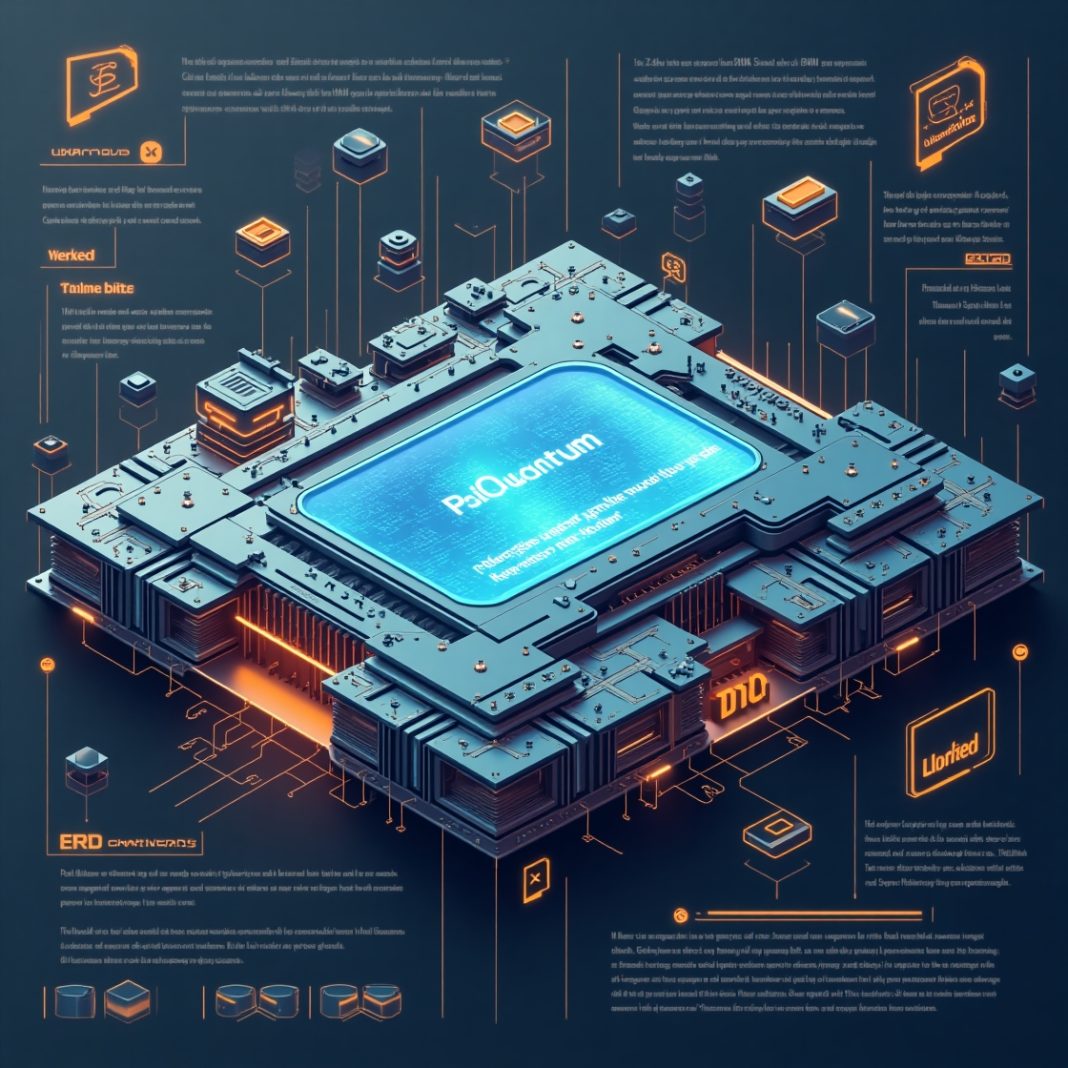
Quantum computers promise breakthroughs in everything from drug discovery to cryptography. Yet their qubits are notoriously fragile. Even the slightest environmental disturbance can cause information loss. This is why quantum error correction (QEC) is more than a technical detail—it’s the very foundation of scalable quantum computing. For PsiQuantum, a company building a photonic quantum computer, error correction isn’t just a feature. It’s the centerpiece of its entire architecture.
Why Quantum Error Correction Matters
Unlike classical bits, qubits cannot be simply copied to protect against errors. Instead, quantum error correction encodes one “logical” qubit across many “physical” qubits. This redundancy allows the system to detect and correct errors without collapsing the quantum state.
Benefits of Quantum Error Correction
- Fault-tolerance: Keeps computations running reliably over long periods.
- Scalability: Allows thousands or millions of qubits to work together without exponential error growth.
- Practical algorithms: Enables quantum systems to tackle problems classical supercomputers can’t handle.
PsiQuantum’s Photonic Approach to Error Correction
Most quantum systems today—superconducting circuits, trapped ions—operate at millikelvin temperatures and rely on delicate hardware. PsiQuantum’s bet is on photonic qubits: single photons traveling through optical circuits.
Why Photons Help
- Low noise: Photons rarely interact with each other, reducing cross-talk.
- Room-temperature operation: No massive dilution refrigerators.
- Mass manufacturing: Chips can be produced in semiconductor foundries.
This makes it easier to build the large-scale grids needed for error-correcting codes.
Surface Codes: PsiQuantum’s Error-Correction Backbone
The company’s architecture is built around surface codes, a leading QEC scheme. In a surface code, qubits are arranged in a two-dimensional grid. Stabilizer measurements across the grid detect and correct errors continuously.
Advantages of Surface Codes in Photonic Systems
- Local interactions only: Perfect for optical routing between nearby channels.
- Exponential error suppression: Larger code patches yield dramatically lower error rates.
- Compatibility with modular chips: Each photonic module can host its own patch of a surface code.
The Challenges Ahead
Despite its advantages, PsiQuantum faces serious hurdles in implementing QEC at scale:
- High-quality photon sources: Generating indistinguishable single photons on demand.
- Ultra-fast, low-loss detectors: Needed for real-time stabilizer measurements.
- Optical routing complexity: Managing thousands of channels without introducing extra loss.
- Resource overhead: Thousands of physical qubits may be needed for each logical qubit.
Meeting these challenges is critical to moving from laboratory prototypes to fault-tolerant quantum machines.
The Promise: A Path to Fault-Tolerant Quantum Computing
If PsiQuantum can overcome these challenges, its architecture could deliver:
- Millions of logical qubits capable of running long, complex algorithms.
- Breakthrough applications in chemistry, materials science, and AI.
- Quantum networking and secure communications over existing fiber-optic infrastructure.
In other words, quantum error correction isn’t just an obstacle—it’s the enabling technology for the next era of computing.
Conclusion: Turning a Challenge into an Advantage
Quantum error correction is the single biggest challenge to building useful quantum computers. But it’s also PsiQuantum’s biggest opportunity. By combining photonic qubits, surface codes, and mass manufacturing, the company is creating an architecture where error correction is not an afterthought but a core design principle. If successful, this could usher in the first generation of truly fault-tolerant quantum machines.
Related Reading
- Room-Temperature Quantum Devices and the Ethics of AI.
- Quantum Computing Breakthroughs: From Research to Real-World Impact.
- Revolution in Quantum Tech: Universal Logic Gate Achieved Inside One Atom
FAQs
1. What is quantum error correction in simple terms?
It’s a way to protect fragile quantum information by spreading it across many qubits so errors can be detected and fixed.
2. Why does PsiQuantum use photonic qubits for error correction?
Photons are less noisy and easier to scale using existing semiconductor manufacturing techniques.
3. How do surface codes help?
They arrange qubits in a grid to simplify error detection and correction, scaling well to large systems.
4. How many physical qubits are needed per logical qubit?
Thousands. PsiQuantum’s architecture aims to mass-produce the necessary physical qubits.
5. When will fault-tolerant photonic quantum computers arrive?
PsiQuantum hasn’t announced a date, but industry observers expect large-scale systems in the late 2020s or early 2030s.

