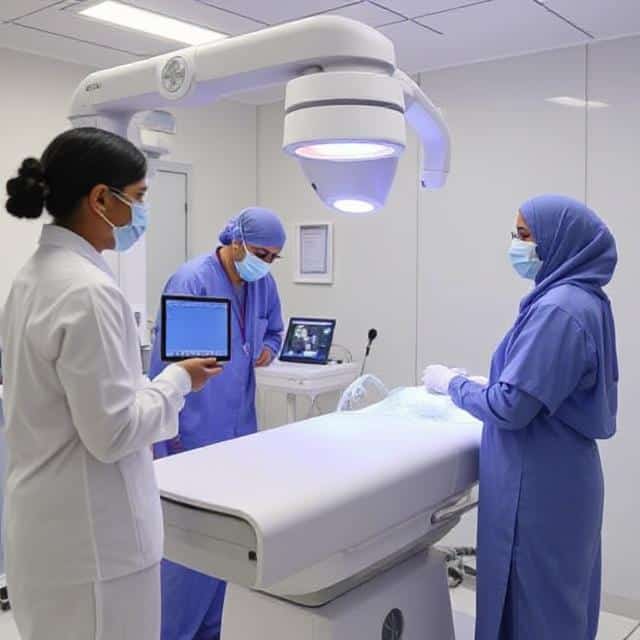

Robotic-assisted gynaecological surgery has seen exponential growth in India over the past decade. From major metro hospitals to emerging public institutions, this high-precision technique is now shaping the future of women’s healthcare. With benefits like reduced blood loss, minimal invasiveness, and faster recovery, patients and surgeons alike are rapidly adopting this technology.
Key Drivers Behind the Growth
A multi-centre study across top Indian hospitals reveals that benign and malignant gynaecological procedures are increasingly performed using robotic systems. Endometriosis, fibroids, and hysterectomies are among the most common surgeries, while robotic support is also playing a critical role in early-stage cancer treatments and fertility-preserving operations.
Benefits of Robotic Gynaecological Surgery
Patients are experiencing significantly better surgical outcomes:
- Less post-operative pain
- Minimal scarring
- Shorter hospital stays
- Greater fertility preservation, especially in myomectomy cases
- Quicker return to daily activities
Training and Skill Development in India
Recognizing the need for skilled practitioners, India has introduced structured robotic training programs. Organizations like the Association of Gynaecological Robotic Surgeons (AGRS) are providing diplomas in collaboration with global institutions. These initiatives aim to bridge the gap between robotic availability and surgeon expertise.
Accessibility and Public Sector Engagement
Public hospitals such as AIIMS Delhi and KGMU Lucknow are integrating robotic surgery through partnerships and CSR funding. While costs remain a barrier, surgeons are now optimizing procedures to use fewer instruments, helping reduce overall expenditure. Moreover, insurance coverage is slowly beginning to include robotic-assisted surgeries.
India’s Role in the APAC Robotic Market
India is projected to claim around 6% of the Asia-Pacific robotic surgery market, supported by its large population, skilled doctors, and growing medical infrastructure. The nation is not only catching up but also setting new benchmarks in technology-enabled gynaecological care.
Conclusion
India’s robotic gynaecology journey represents more than a technological leap—it’s a transformation in how women’s health is addressed with precision, empathy, and efficiency. With better outcomes, broader accessibility, and skilled training on the rise, India is leading a silent revolution in the operating room.
Related Reading.
- Ambient Invisible Intelligence: The Future of Smart Living
- Inside Polar Night Energy’s Sand Battery: The Future of Heat Storage?
- Seasonal Storage with Sand: Solving the Winter Energy Gap
FAQs
1. What is robotic gynaecological surgery?
It’s a minimally invasive surgical method using robotic systems to assist surgeons in performing complex procedures with more precision.
2. Which conditions are commonly treated using robotic surgery in gynaecology?
Common conditions include fibroids, endometriosis, ovarian cysts, uterine cancer, and adenomyosis.
3. Is robotic surgery available in government hospitals in India?
Yes, major institutions like AIIMS and KGMU have adopted robotic platforms for gynaecological surgeries.
4. How is robotic surgery better than traditional laparoscopy?
Robotic systems offer greater precision, enhanced visualization, and better control, leading to improved outcomes and faster recovery.
5. Is robotic surgery covered by insurance in India?
Some private and public insurers are beginning to include robotic surgery under their coverage, though it is still limited.