
Introduction
Agentic AI is one of the most exciting trends in artificial intelligence today. These systems can plan, decide, and act with little human input. In theory, they promise faster decisions, lower costs, and smarter operations.
But here’s the truth: most enterprises are not ready.
The biggest challenge isn’t the AI itself—it’s the data behind it. In this article, you’ll learn why agentic AI struggles in real-world businesses, what the hidden data problem looks like, and how to fix it.
What Is Agentic AI?
Agentic AI refers to AI systems that act like autonomous agents. They don’t just respond—they plan, execute, and adapt.
Key features of agentic AI:
- Goal-driven decision-making
- Multi-step reasoning and planning
- Ability to use tools and APIs
- Continuous learning from outcomes
Example:
A customer support agent powered by agentic AI can:
- Understand a complaint
- Check order history
- Issue a refund
- Notify logistics
All without human involvement.
Sounds powerful, right? But it depends heavily on one thing: clean, connected data.
Enterprise Reality: Where Things Break
Most companies assume they can plug AI into their systems and see instant results. That rarely happens.
Common enterprise challenges:
- Data scattered across departments
- Outdated legacy systems
- Inconsistent data formats
- Poor data governance
Real-world example:
A retail company tries to deploy an AI agent for inventory management. The system fails because:
- Sales data is in one system
- Warehouse data is in another
- Supplier data is outdated
The AI cannot make accurate decisions because the data is incomplete.
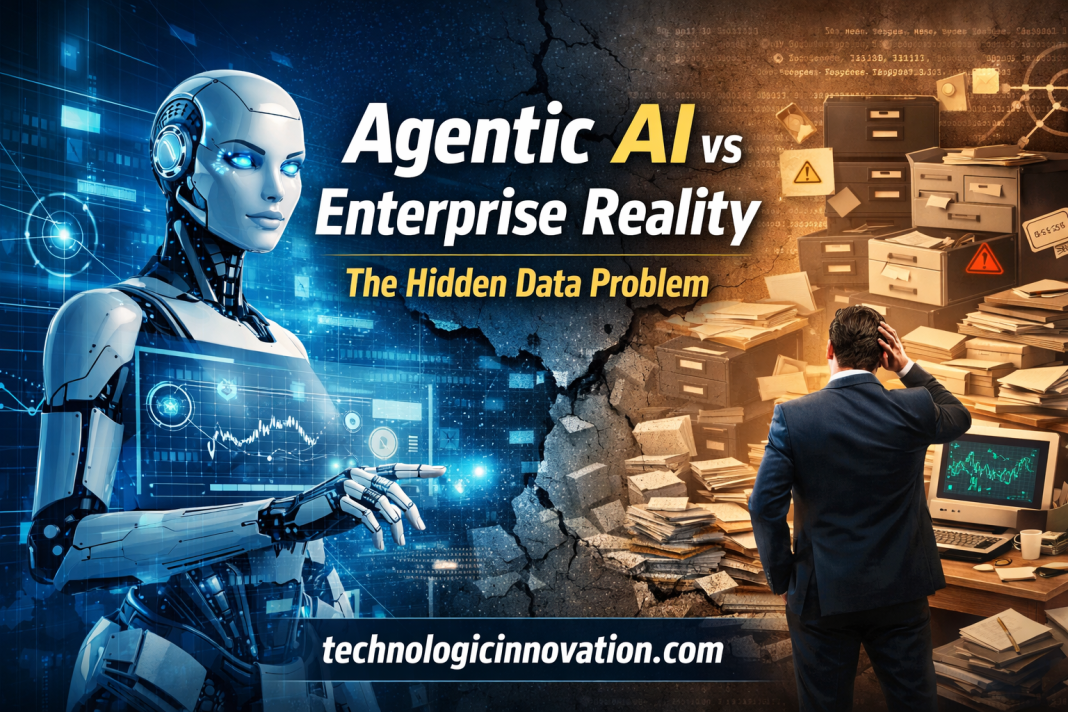
The Hidden Data Problem Explained
1. Data Silos
Data is often locked in separate systems that don’t talk to each other.
Impact:
- AI lacks full context
- Decisions become inaccurate
2. Poor Data Quality
Bad data leads to bad outcomes.
Common issues:
- Missing values
- Duplicate records
- Incorrect entries
Result:
Agentic AI makes wrong decisions—fast.
3. Lack of Real-Time Data
Agentic AI works best with fresh data.
But many enterprises rely on:
- Batch updates
- Delayed reporting
Impact:
- AI reacts too late
- Opportunities are missed
4. Weak Data Governance
Without proper controls, data becomes unreliable.
Problems include:
- No clear ownership
- Security risks
- Compliance issues
Why Agentic AI Amplifies Data Problems
Traditional AI models analyze data. Agentic AI acts on it.
That’s a big difference.
Key risks:
- Faster mistakes at scale
- Automated bad decisions
- Reduced human oversight
Example:
An AI agent in finance approves loans based on flawed data. The result? Increased risk and financial loss.
Agentic AI vs Traditional AI
| Feature | Traditional AI | Agentic AI |
|---|---|---|
| Role | Analyze | Act & decide |
| Human involvement | High | Low |
| Risk level | Moderate | High (if data is poor) |
| Data dependency | Important | Critical |
How to Fix the Hidden Data Problem
You don’t need perfect data—but you need reliable data systems.
1. Break Down Data Silos
- Integrate systems using APIs
- Use centralized data platforms
2. Improve Data Quality
- Clean and validate data regularly
- Use automated data quality tools
3. Enable Real-Time Data Access
- Invest in streaming data pipelines
- Reduce reliance on batch processing
4. Strengthen Data Governance
- Assign data ownership
- Set clear policies and standards
5. Start Small with AI Agents
- Test in controlled environments
- Scale gradually
Best Practices for Enterprise Adoption
Build a Strong Data Foundation First
- AI success starts with data readiness—not algorithms.
Align AI with Business Goals
- Focus on solving real problems, not just using new tech.
Keep Humans in the Loop
- Even agentic systems need oversight.
Monitor and Audit AI Decisions
- Track performance and fix issues early.
Case Study: Fixing Data Before AI
A logistics company wanted to automate delivery routing using agentic AI.
Initial failure:
- Disconnected GPS data
- Inconsistent address formats
What they did:
- Unified data sources
- Cleaned historical data
- Implemented real-time tracking
Result:
- 25% faster deliveries
- Fewer routing errors
- Successful AI deployment
FAQs
1. What is the biggest challenge in agentic AI adoption?
The biggest challenge is poor data quality and fragmented systems.
2. Can agentic AI work with imperfect data?
Yes, but performance drops significantly. Better data leads to better decisions.
3. How is agentic AI different from generative AI?
Generative AI creates content. Agentic AI takes actions and makes decisions.
4. Do small businesses face the same data issues?
Yes, but at a smaller scale. Even simple systems can create data silos
5. How can companies prepare for agentic AI?
Start by improving data quality, integration, and governance before deploying AI.
Related Reading
Conclusion
Agentic AI has huge potential, but most enterprises are not ready for it yet.
The real barrier isn’t the technology—it’s the data.
If your data is fragmented, outdated, or unreliable, agentic AI will only make problems worse. But if you build a strong data foundation, you can unlock its full power.
Call to Action:
Before investing in agentic AI, audit your data systems today. Fix the foundation—and the results will follow.