

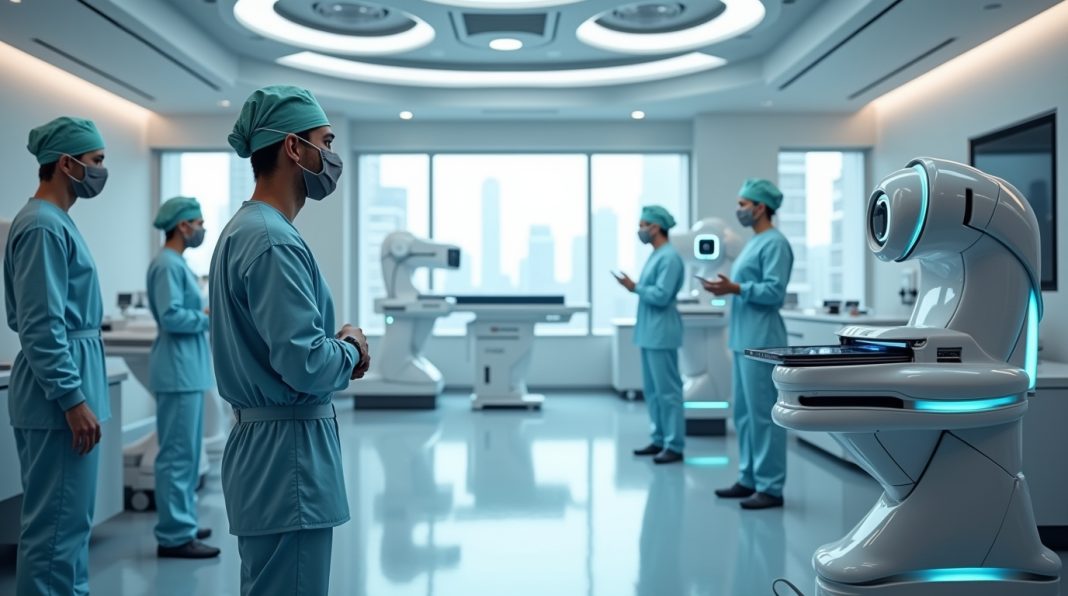

Introduction: The New Era of Robotic Precision in Healthcare
Surgery is entering a new age—one defined by artificial intelligence, automation, and unmatched precision. In 2025, AI-powered surgical robots are revolutionizing operating rooms across the world, turning what was once science fiction into everyday reality.
These smart machines are not replacing surgeons but empowering them to perform with greater accuracy, consistency, and safety. From real-time data analytics to predictive insights, AI is redefining how surgeries are planned, performed, and perfected.
How AI is Transforming Surgical Procedures
Artificial intelligence has taken robotic-assisted surgery far beyond mechanical control. Today’s AI-driven surgical systems combine robotics, machine learning, and medical imaging to assist surgeons with exceptional precision.
Here’s how AI is making operations smarter and safer:
1. Unmatched Surgical Precision
AI algorithms analyze thousands of data points in real-time, ensuring surgical tools move with sub-millimeter accuracy. This means fewer errors, minimal tissue damage, and faster patient recovery.
2. Real-Time Decision Making
During an operation, AI systems continuously evaluate the patient’s vital signs and surgical images. They can alert surgeons to potential complications before they occur, improving outcomes dramatically.
3. Personalized Surgery Plans
Using a patient’s medical history and imaging scans, AI models create customized surgical blueprints tailored to each individual’s anatomy—reducing risks and improving success rates.
4. Post-Operative Analytics
After the surgery, AI tools track recovery patterns, predict potential complications, and recommend personalized aftercare routines for better healing.
Case Study: How Hospitals Are Adopting AI Surgical Robots
Leading hospitals worldwide are now integrating AI robotic systems to enhance surgical performance.
For instance, Mayo Clinic introduced AI-assisted robots for neurosurgery in 2024. The results were impressive:
- Surgical accuracy increased by 28%.
- Recovery times dropped by 35%.
- Complications reduced by nearly 20%.
Similarly, in Singapore General Hospital, AI robots now assist in minimally invasive surgeries, allowing surgeons to perform complex tasks with absolute steadiness and efficiency.
Why AI Robots Are Safer Than Ever
AI has drastically improved the safety and reliability of robotic-assisted surgeries:
- Error Detection: Real-time data alerts surgeons before a mistake occurs.
- AI-Powered Imaging: 3D visualizations help identify hidden blood vessels or tumors.
- Reduced Human Fatigue: Robots don’t tire, ensuring consistent performance in long procedures.
- Enhanced Monitoring: AI tracks every movement, ensuring compliance with surgical protocols.
In many hospitals, surgical outcomes have improved by over 30% thanks to these advancements.
Beyond the Operating Room: Smarter Healthcare Ecosystems
AI-powered surgical robots are part of a larger digital transformation in healthcare. Hospitals are becoming smarter, more connected systems where robotics play multiple roles:
- Autonomous Delivery Robots: Transport medicines and equipment safely.
- AI Cleaning Bots: Maintain sterile environments automatically.
- Rehabilitation Robots: Help patients regain movement post-surgery.
- Diagnostic Systems: Detect diseases early through AI imaging.
This integration ensures that healthcare is not only advanced but also efficient, cost-effective, and patient-centered.
Challenges to Overcome
Despite remarkable progress, some challenges remain:
- High Implementation Costs: Advanced systems require significant investment.
- Training Needs: Surgeons must adapt to AI-assisted procedures.
- Data Privacy: Protecting sensitive medical data is critical.
- Ethical Concerns: Balancing automation with human control remains key.
Hospitals and policymakers are now working together to create guidelines for safe and ethical AI adoption.
The Future of AI-Powered Surgery
By 2030, experts predict that over 50% of surgeries will involve AI assistance. Upcoming innovations include:
- Fully Autonomous Surgical Units for routine operations.
- 5G-Powered Remote Surgery allowing global experts to assist live.
- AI Voice Commands for hands-free operation control.
- Self-Learning Robots that refine their skills after every procedure.
These breakthroughs will make surgery more accessible, affordable, and effective for patients worldwide.
Conclusion: Smarter Machines, Healthier Lives
The rise of AI-powered surgical robots in 2025 marks a defining moment in medical history. These intelligent systems are not replacing human expertise—they’re enhancing it, bringing new levels of precision, safety, and insight into every operation.
As technology and medicine continue to merge, the future of healthcare looks brighter, smarter, and more compassionate than ever before.
Related Reading
- AI Surgical Robots 2025: How Smart Machines Are Saving Lives.
- Inside the Future of Surgery: How AI Robots Are Transforming Hospitals.
- How Machine Learning Is Powering Smarter Business Decisions.
FAQs
1. What are AI-powered surgical robots?
They’re advanced robotic systems enhanced with AI that assist surgeons in performing precise and minimally invasive operations.
2. Do AI robots replace doctors?
No. They support surgeons, improving accuracy and reducing the risk of human error.
3. Are AI-assisted surgeries safe?
Yes. AI monitoring and predictive analysis make surgeries safer than ever.
4. What’s the main benefit of AI in surgery?
Improved precision, reduced recovery time, and fewer complications.
5. How will AI surgery evolve by 2030?
We’ll see autonomous systems, global telesurgeries, and real-time data-driven decision-making.


