

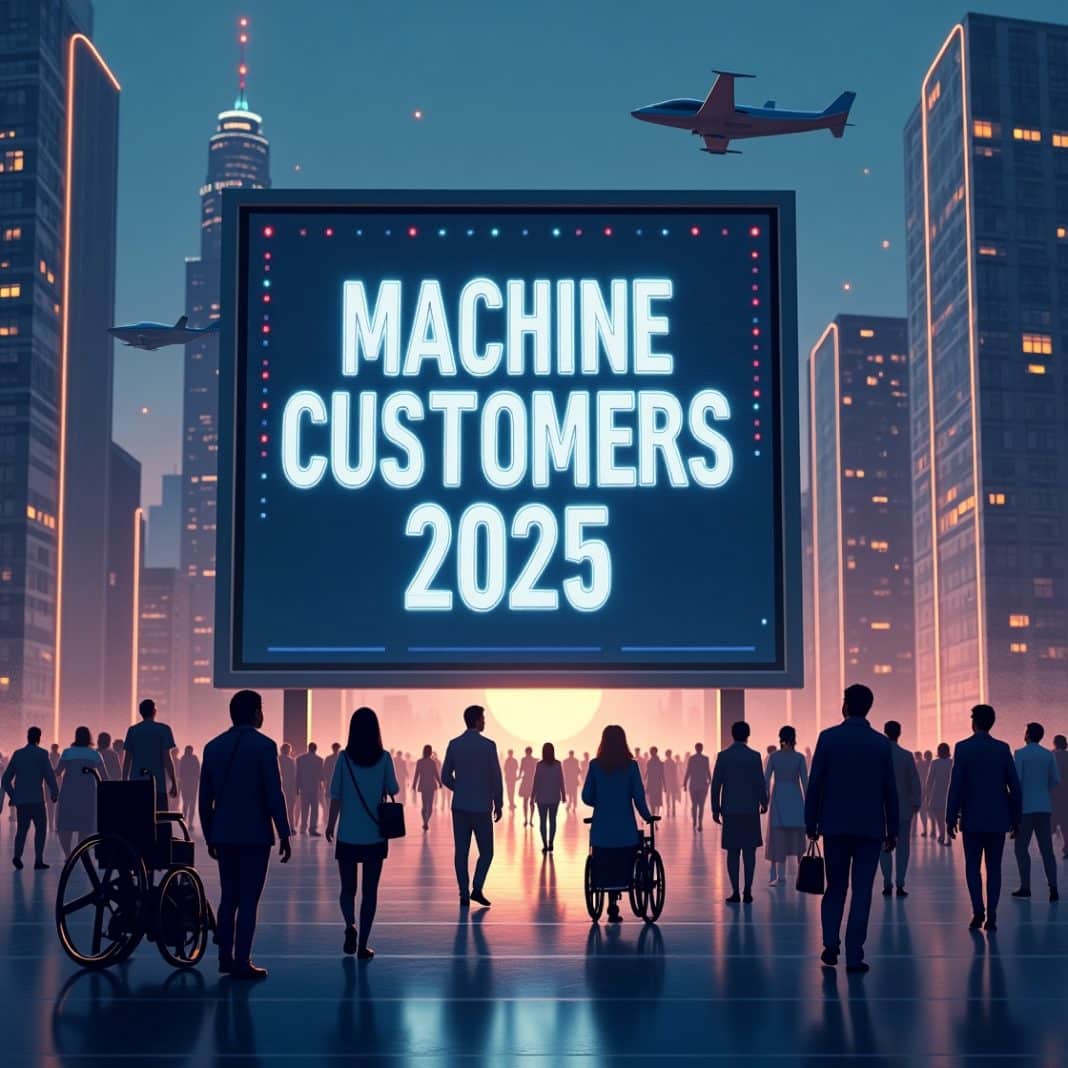

Introduction: Why Everyone Is Talking About Machine Customers
Imagine a future where most “customers” aren’t human. By 2025, intelligent machines—self-driving cars, smart appliances, AI agents—will make purchase decisions worth over $30 trillion annually.
This isn’t science fiction. It’s the next major disruption in global commerce. The rise of machine customers represents one of the largest economic shifts since the internet boom.
What Are Machine Customers?
Machine customers are AI-driven systems or connected devices that can research, compare, and purchase products or services without human input.
Examples include:
- A self-driving car paying for charging or tolls automatically.
- Smart fridges reordering groceries when supplies run low.
- AI assistants booking flights, hotels, or services based on preferences.
These transactions are not just automated—they’re intelligent, data-driven, and personalized.
The $30 Trillion Market Potential
According to Gartner, machine customers could represent 20% of global commerce by 2030, creating an estimated $30 trillion opportunity by 2025.
Key industries leading the shift:
- Automotive – EVs purchasing charging services and maintenance automatically.
- Retail – Smart appliances reordering household products.
- Healthcare – AI-driven devices scheduling maintenance and supply refills.
- Finance – AI wallets executing trades and bill payments.
- Logistics – Autonomous drones and fleets handling service contracts.
Why Machine Customers Are Game-Changers
Machine customers change the rules of business. They value:
- Speed and accuracy over brand loyalty.
- Data-driven decisions based on algorithms.
- Seamless experiences with no tolerance for friction.
This means businesses must adapt from human-centric customer journeys to machine-first ecosystems.
Real-World Examples in Action
- Tesla vehicles already make autonomous updates and payments for software features.
- Amazon Dash Replenishment Service allows devices to reorder supplies automatically.
- Industrial IoT systems purchase maintenance services based on predictive analytics.
How Businesses Can Prepare for Machine Customers
To thrive in the machine customer economy, companies must:
- Invest in APIs & automation – Ensure systems can communicate with machine buyers.
- Build trust through data security – Machines prioritize safe, transparent transactions.
- Optimize for algorithms, not ads – Machine customers won’t be swayed by marketing slogans.
- Enable microtransactions – Support real-time, automated payments.
- Rethink customer experience – Machines care about efficiency, not emotions.
Conclusion: Don’t Miss the $30 Trillion Opportunity
Machine customers are not a distant future—they’re already here. By 2025, they’ll reshape entire industries, shifting purchasing power from people to intelligent systems.
Businesses that adapt early will capture their share of the $30 trillion market. Those that ignore this shift risk being left behind.
Related Reading
- What Are Machine Customers? The $30 Trillion Shift Every CEO Must Know.
- Why AI-resistant careers are on the rise: What to learn now for long-term success.
- AI-Proof Jobs: The Skills and Careers That Will Survive Automation
FAQs About Machine Customers
Q1: Will machine customers replace human buyers?
Not entirely. They’ll handle routine, data-driven purchases, freeing humans to focus on complex decisions.
Q2: What’s the biggest risk for businesses?
Being invisible. If machines can’t find or trust your service, you’ll lose market share.
Q3: Which companies are already preparing?
Tech leaders like Amazon, Tesla, Microsoft, and Alibaba are investing heavily in machine-to-machine commerce.


