Introduction
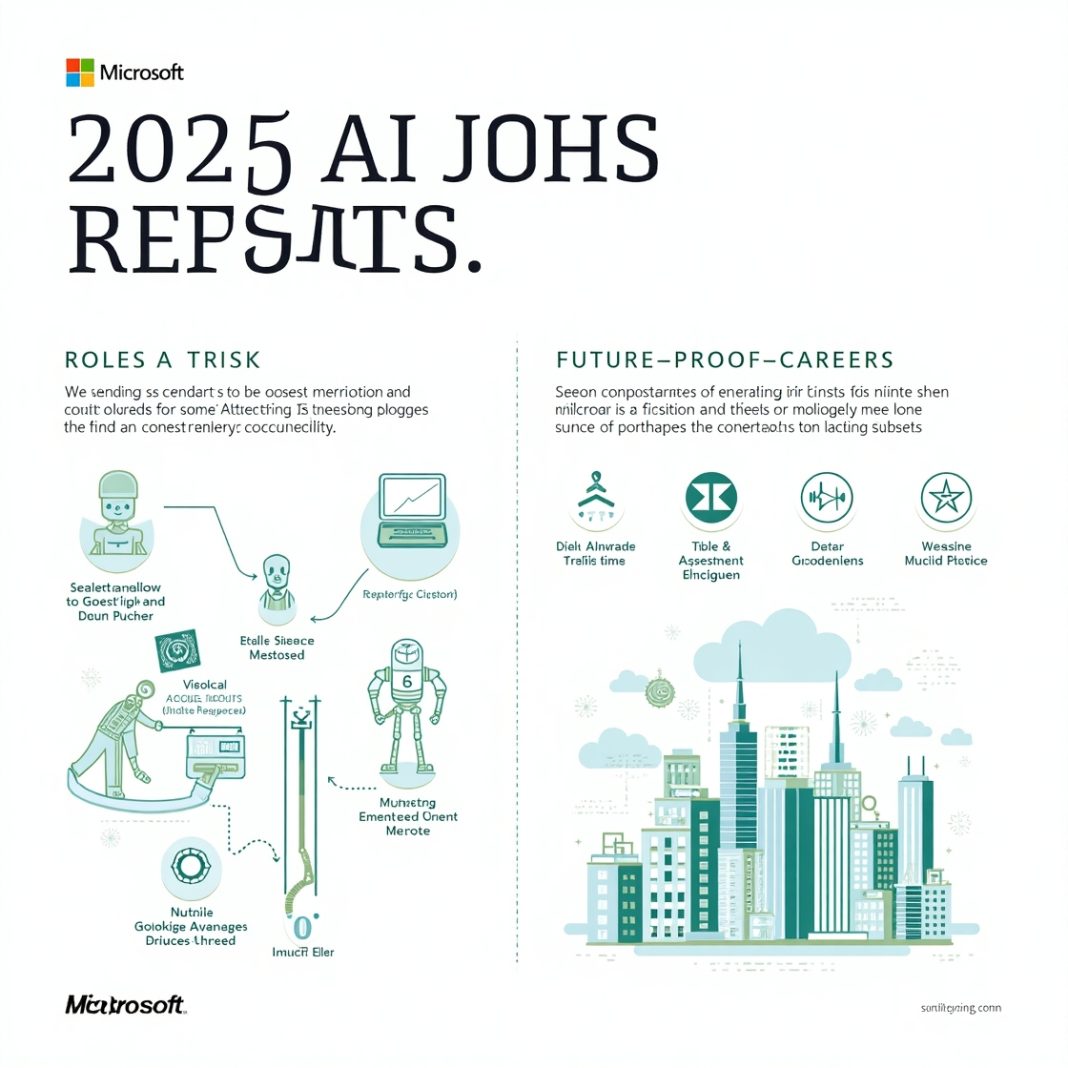
Artificial Intelligence (AI) is no longer just a futuristic buzzword—it’s here, transforming industries and reshaping the job market faster than expected. As 2025 unfolds, professionals worldwide are asking: Will my job survive the AI wave? Microsoft’s recent report offers some clarity, highlighting 40 professions most at risk and 40 careers that remain safe. Understanding these shifts is crucial for workers, students, and businesses preparing for the future.
How AI Is Reshaping the Workforce
AI tools can process information, automate repetitive tasks, and even make complex decisions. While this boosts productivity, it also threatens roles that rely heavily on routine. For example, chatbots are now handling customer support, and AI-driven platforms are drafting legal documents within seconds. On the flip side, jobs requiring creativity, empathy, and critical thinking remain resilient.
40 Jobs AI Is Expected to Replace by 2025
Microsoft’s analysis shows that automation will most affect professions centered on repetition, data entry, or predictable outcomes.
Examples of High-Risk Jobs
- Administrative Assistants – AI scheduling tools like Microsoft Copilot can manage calendars more efficiently.
- Telemarketers – Automated voice systems now handle large-scale customer outreach.
- Data Entry Clerks – Machine learning systems input and process information faster than humans.
- Paralegals – Legal AI tools review contracts and case laws in seconds.
- Retail Cashiers – Self-checkout systems and automated payments are becoming standard.
Other At-Risk Professions
- Proofreaders
- Bank Tellers
- Receptionists
- Fast-food Workers
- Market Research Analysts
- Customer Service Agents
- Warehouse Clerks
- Travel Agents
- Tax Preparers
- Insurance Underwriters
(And many others in routine-driven industries.)
40 Jobs Safe from AI in 2025
Not all professions face decline. Careers that rely on creativity, strategy, emotional intelligence, and hands-on expertise are considered safe for now.
Examples of AI-Resilient Jobs
- Healthcare Professionals – Doctors, nurses, and therapists require empathy and human judgment.
- Teachers – While AI can assist, teaching needs personal connection and adaptability.
- Creative Artists – Writers, designers, and filmmakers thrive on originality and storytelling.
- Skilled Trades – Electricians, plumbers, and mechanics perform physical problem-solving AI can’t replicate.
- Managers & Leaders – Strategic decision-making and leadership remain human-driven.
Other Safe Professions
- Psychologists
- Software Developers
- Marketing Strategists
- Scientists & Researchers
- Social Workers
- Lawyers (litigation and advocacy roles)
- Engineers
- HR Specialists
- Event Planners
- Entrepreneurs
Real-World Example: AI in Retail
Walmart recently expanded self-checkout and AI-driven inventory tracking, reducing cashier demand. However, it also created new jobs in AI system management, supply chain analytics, and customer experience design. This shows that while some roles vanish, others evolve.
Preparing for the Future of Work
The best defense against AI disruption is adaptability. Workers should invest in skills that complement AI rather than compete with it. Key areas include:
- Digital literacy and AI familiarity.
- Creativity and problem-solving.
- Emotional intelligence and leadership.
- Lifelong learning and reskilling.
Conclusion
AI in 2025 is not just replacing jobs—it’s redefining them. While 40 professions face disruption, another 40 remain safe, and countless new roles are emerging. By focusing on human strengths—creativity, empathy, and adaptability—we can thrive in an AI-powered world. The future of work belongs not to machines, but to humans who learn to work with them.
Related Reading
- Are Sand Battery Systems the Key to Sustainable Power in 2025?
- Meet Alexa Robot: The Future of Voice-Controlled Living
- AI vs Technology Explained: What Sets Them Apart and How They Work Together
FAQs
1. Which jobs will disappear first due to AI in 2025?
Administrative assistants, telemarketers, and data entry clerks are among the earliest to be replaced.
2. Are creative jobs safe from AI?
Yes, creativity-driven professions like writing, design, and filmmaking are safe since AI struggles with true originality.
3. Can AI replace doctors or teachers?
No. While AI supports them with data, human judgment and empathy are irreplaceable.
4. How can workers prepare for AI disruption?
Focus on continuous learning, digital literacy, and developing soft skills such as problem-solving and leadership.
5. Will AI create new jobs too?
Absolutely. Roles in AI maintenance, ethics, and system design are growing rapidly.