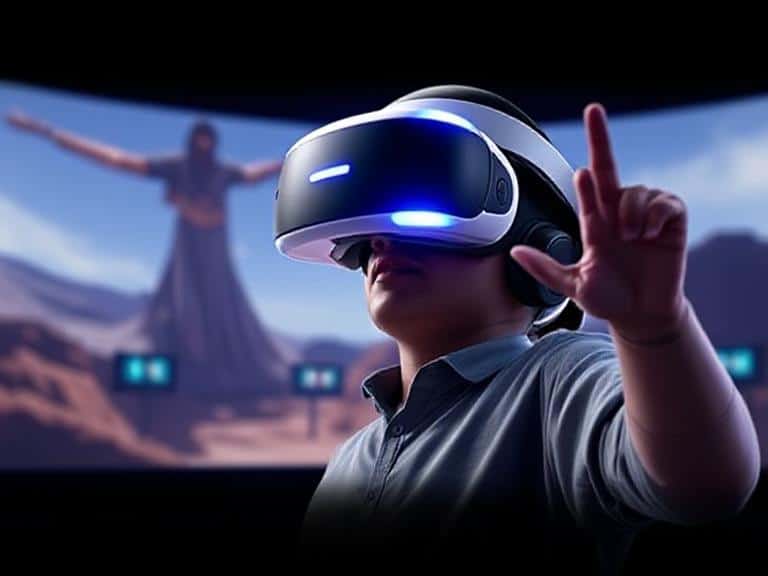

The world of virtual reality (VR) is rapidly evolving, and Sony’s upcoming PlayStation VR3 is expected to be a major milestone. Building on the foundation of the PSVR2, the next-generation headset could significantly enhance immersive experiences, making VR more accessible and engaging for both gamers and developers.
Enhanced Visual Fidelity and Display
The expected increase in resolution and refresh rate is one of the most talked-about aspects of the PlayStation VR3. OLED or mini-LED screens are rumored to be included, offering a wider color gamut, deeper blacks, and sharper visuals. This would lessen motion blur, which can be uncomfortable, and make the scene more realistic.
Related: Sony PlayStation VR3: Features, Prospects, and Future
Wireless Freedom and Improved Tracking
The older PSVR headsets’ dependence on cable connections was a prevalent flaw. VR3 might offer a fully wireless experience, possibly utilizing Wi-Fi 6E or a brand-new proprietary wireless protocol. When combined with inside-out tracking, this could simplify setup and do away with the need for external cameras.
Haptic Feedback and Eye Tracking
The PSVR3 is anticipated to have adjustable triggers and haptic feedback integrated into the controllers and headset, taking inspiration from the DualSense controller. Foveated rendering, a technique that lowers rendering burden by focussing detail where the eyes are focused, may also be possible using eye tracking technology.
Expanding Beyond Gaming
It’s possible that Sony is promoting the PSVR3 for uses other than gaming. Within the VR ecosystem, fitness applications, educational simulations, and virtual travel are becoming more and more popular. These applications might receive a lot of attention because to Sony’s media library and content collaborations.
Backward Compatibility and Ecosystem Integration
Integration with PS5 and backward compatibility with PSVR2 games will be essential. A smooth cross-platform experience will entice customers to upgrade and support Sony’s continued dominance in console-based virtual reality.
Final Thoughts
It’s possible that the PlayStation VR3 may revolutionize virtual reality gaming and other fields. With state-of-the-art capabilities like wireless connectivity, haptic feedback, and eye tracking, Sony hopes to provide a more immersive experience than its predecessors.
The PSVR3’s success will rely on content, cost, and usability in addition to hardware as the VR market grows. As we get closer to what might be the next major advancement in virtual reality, keep an eye out for Sony’s official updates.