Introduction
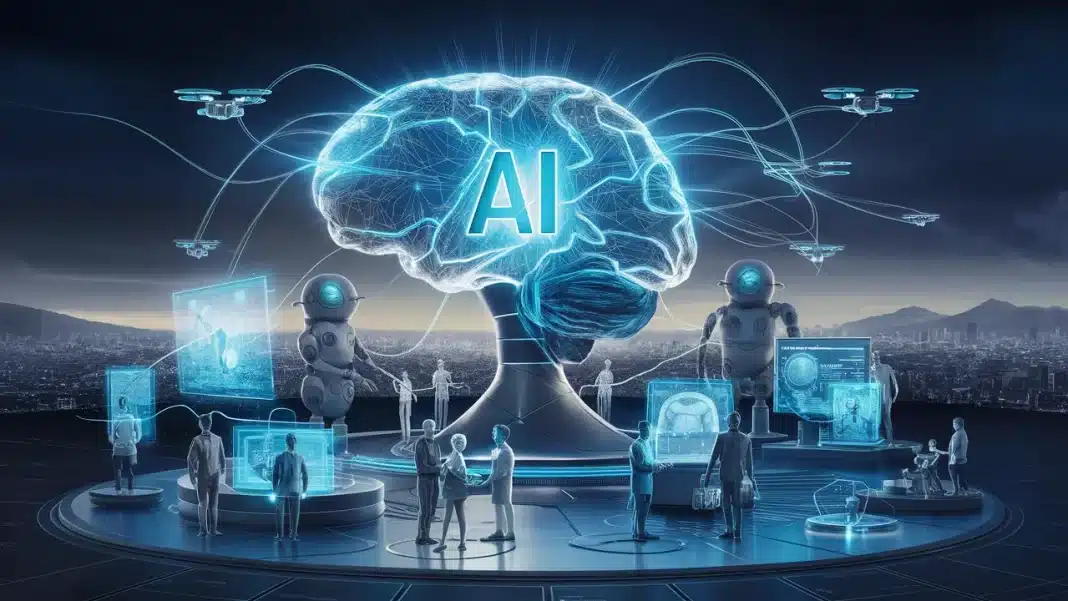
Traditional computing systems suffer power and efficiency constraints as artificial intelligence (AI) develops further. Researchers are using neuromorphic computing, a ground-breaking technique that replicates the composition and operations of the human brain to handle data more effectively, to get over these obstacles.
To build incredibly effective AI systems, neuromorphic computing blends neurology, machine learning, and specialized hardware. This article examines the definition, operation, advantages, uses, difficulties, and prospects of AI-driven neuromorphic computers.
What is Neuromorphic Computing?
Definition
Using spiking neural networks (SNNs) and specialized hardware, neuromorphic computing is an AI computer paradigm that mimics how the human brain analyzes, learns, and adapts. Neuromorphic systems handle information more effectively by using analog and event-driven processing as opposed to standard computing, which uses binary logic (0s and 1s).
Key Components of Neuromorphic Computing:
- ✅ Spiking Neural Networks (SNNs) – Mimic the electrical activity of biological neurons.
- ✅ Neuromorphic Chips – Hardware designed to replicate brain-like computation.
- ✅ Event-Driven Processing – Processes only relevant information, reducing power consumption.
- Compared to conventional AI models, this brain-inspired method uses a lot less energy and enables real-time learning and adaptation.
How Neuromorphic Computing Works?
Von Neumann-based systems and other traditional computing architectures are fundamentally different from neuromorphic computing. This is how it operates:
Spiking Neural Networks (SNNs)
Unlike traditional artificial neural networks (ANNs), which process data in layers, SNNs transmit information using electrical spikes, just like biological neurons. This makes neuromorphic AI faster and more efficient.
Neuromorphic Hardware (Chips & Processors)
Neuromorphic computing relies on specialized hardware, including:
🔹 Intel Loihi – A neuromorphic chip designed for low-power AI applications.
🔹 IBM TrueNorth – A brain-inspired chip capable of parallel processing.
🔹 SpiNNaker (Spiking Neural Network Architecture) – A processor designed for real-time neural simulations.
Asynchronous Event-Driven Processing
Traditional AI processes all data sequentially, consuming high energy. Neuromorphic systems only activate when needed, significantly reducing power consumption and improving real-time decision-making.
Benefits of Neuromorphic Computing for AI
- ✔️ Energy Efficiency – Uses up to 1,000x less energy than conventional AI chips.
- ✔️ Real-Time Processing – Ideal for edge AI and low-latency applications.
- ✔️ Continuous Learning – Adapts and improves without constant retraining.
- ✔️ Scalability – Supports large-scale neural networks with minimal power consumption.
- ✔️ Parallel Processing – Handles multiple AI tasks simultaneously, improving efficiency.
- Because of these benefits, neuromorphic computing is a perfect fit for applications involving next-generation AI.
Applications of Neuromorphic AI Computing
Numerous sectors are changing as a result of neuromorphic computing, which makes AI systems smarter, quicker, and more effective.
Edge AI & IoT (Internet of Things)
- Neuromorphic chips enable low-power AI for smartphones, wearables, and IoT devices.
- Example: AI-powered smart cameras that detect objects instantly with minimal energy usage.
Robotics & Autonomous Systems
- Real-time decision-making is critical for robots and autonomous systems.
- Neuromorphic computing allows AI-powered drones, self-driving cars, and robotic assistants to process sensory data faster.
Healthcare & Medical Diagnostics
- AI-driven neuromorphic chips improve brain-computer interfaces (BCIs) for paralysis patients.
- Advanced AI medical diagnostics with real-time pattern recognition in medical imaging.
Cybersecurity & AI-Powered Threat Detection
- Neuromorphic AI enables real-time cybersecurity monitoring and anomaly detection.
- Detects cyber threats faster with minimal processing power.
Financial AI & Fraud Detection
- AI-driven financial models benefit from low-power, high-speed neuromorphic chips.
- Real-time fraud detection and AI-driven risk assessments.
Space Exploration & Aerospace AI
- NASA is researching neuromorphic AI for deep space missions.
- Low-power neuromorphic chips help spacecraft process data independently without relying on Earth-based computing.
Challenges & Limitations of Neuromorphic Computing
Notwithstanding its potential, neuromorphic computing has a number of adoption and technological obstacles to overcome:
:
🔴 Limited Software Ecosystem – Neuromorphic AI frameworks are still evolving.
🔴 Complex Hardware Development – Neuromorphic chips require custom architecture.
🔴 Lack of Standardization – No universal programming model for neuromorphic systems.
🔴 Higher Initial Costs – Neuromorphic processors are expensive to develop.
However, these issues are being aggressively addressed as research on neuromorphics driven by AI progresses.
The Future of Neuromorphic Computing & AI
AI-Powered Brain-Machine Interfaces (BMIs)
Neuromorphic AI will enhance brain-machine interfaces, enabling real-time neural decoding for prosthetics and medical devices.
AI-Optimized Neuromorphic Cloud Computing
Tech companies are investing in neuromorphic cloud computing for energy-efficient AI model training.
AI in Next-Generation Autonomous Systems
Future self-learning robots and AI assistants will rely on neuromorphic chips for real-time decision-making.
AI & Neuromorphic Supercomputers
Major players like Intel, IBM, and Google are developing neuromorphic AI supercomputers to revolutionize AI research.
Final Thoughts: Is Neuromorphic Computing the Future of AI?
Neuromorphic computing represents a major shift in AI development, promising brain-like efficiency, ultra-low power consumption, and real-time processing.
🔹 Spiking Neural Networks (SNNs) improve AI adaptability.
🔹 Neuromorphic chips enable low-power AI applications.
🔹 Real-time, continuous learning enhances autonomous systems.
As AI models become more complex, neuromorphic computing will play a key role in shaping the future of AI. 🚀